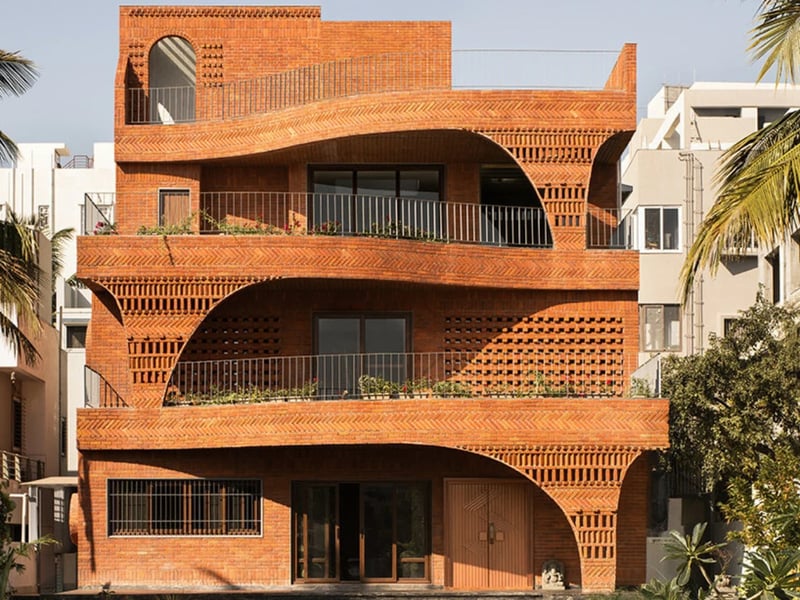
The Anthill is a residential project by Kaushal Tatiya Architects in Ahilyanagar, Maharashtra, that draws on the environmental performance of ant mounds. The exposed brick house uses passive design strategies to regulate temperature and airflow through interconnected spaces, perforated walls and shaded transitional areas. Its layout features branching rooms, varied ceiling heights and filtered natural light, creating a sequence of interior volumes that respond to the surrounding climate.
The residence incorporates stepped terraces and alternating balconies inspired by the traditional Indian chhat to increase shade before sunlight reaches the interior. A 12-foot cantilevered brick slab adds a structural focal point while relying on compression for support. The house operates through passive cooling methods including cross ventilation, thermal mass and shaded courtyards without mechanical ventilation. Photography of the completed project was captured by Avesh Gaur.
Image Credit: Avesh Gaur
Key Themes Behind This Trend
- Biomimetic Cooling
- Nature-inspired airflow systems modeled on ant mounds reveal potential for low-energy homes that maintain comfort without conventional mechanical ventilation.
- Passive Brick Design
- Exposed masonry, thermal mass and perforated walls signal a shift toward climate-responsive residences that reduce operational energy through material intelligence.
- Vernacular Climate Architecture
- Traditional shading elements such as chhat-inspired balconies highlight opportunities for contemporary buildings that merge local heritage with high-performance environmental design.
Where This Applies
- Residential Architecture
- Branching spatial layouts and varied ceiling heights point to new home design models where comfort, light and airflow are embedded into the building form.
- Sustainable Construction
- Compression-based brick structures and shaded courtyards indicate demand for low-carbon building methods that prioritize durability, craft and passive performance.
- Green Real Estate
- Climate-adaptive residences with reduced reliance on mechanical systems create differentiated property value around resilience, energy savings and region-specific design.