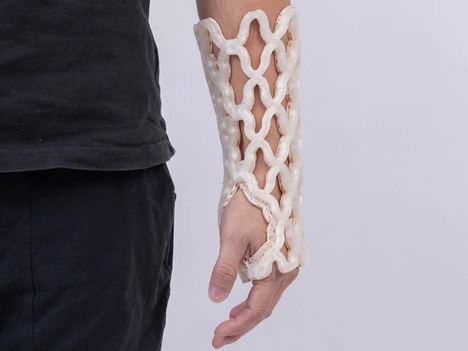
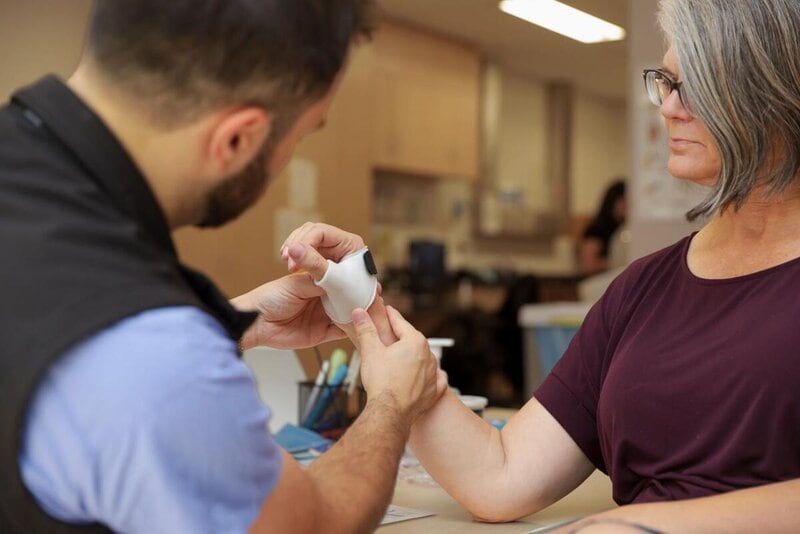
Vancouver General Hospital is advancing 3D-printed medical splints with an on-demand process that produces personalized rehabilitation devices while reducing clinician fabrication time. Developed with Canadian medical 3D-printing company PolyUnity, the workflow allows occupational therapists to capture patient measurements, securely send the data for digital design and print the resulting splint on site. While traditional custom splints can require up to two hours of clinician time, the 3D-printed process requires approximately 30 minutes. Specialized printing material also allows therapists to modify splints as patients’ needs change.
For healthcare providers, the model can free occupational therapists to spend more time directly supporting patients while improving consistency in custom splint production. Local manufacturing can also reduce dependence on international suppliers, shipping requirements and material waste. Planned expansion into rural and remote communities could further improve access to specialized rehabilitation while reducing patient travel and creating a scalable model for localized medical manufacturing.
Image Credit: Vancouver General Hospital
Why This Trend Is Growing
- On-demand Orthotics
- Personalized splints produced at the point of care create new potential for faster rehabilitation support with less reliance on centralized fabrication.
- Localized Medical Manufacturing
- Hospital-based 3D printing introduces a more resilient model for producing regulated devices while reducing shipping delays, inventory constraints and supply chain exposure.
- Adaptive Rehabilitation Devices
- Adjustable printed materials enable splints to evolve with patient recovery, opening space for more responsive and cost-efficient therapeutic products.
Industries Being Reshaped
- Healthcare
- Clinical settings gain value from digitally designed devices that reduce practitioner fabrication time and improve consistency in patient-specific care.
- 3D Printing
- Medical-grade additive manufacturing expands beyond prototyping into distributed production systems for customized, functional healthcare devices.
- Rehabilitation Services
- Therapy providers benefit from scalable customization that can improve access to specialized support in rural, remote and high-demand care environments.