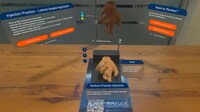

CustoMED introduced a line of patient-specific surgical instruments that are 3D printed to match an individual’s anatomy, the company’s cofounder and CMO, Dr. Amit Zabtani, said. The devices are designed to guide implant positioning and surgical cuts, featuring geometry tailored to preoperative imaging.
The instruments arrived as part of a workflow that translates patient scans into custom surgical guides, with fabrication using additive manufacturing methods and materials suited for the operating room. The team emphasized the role of anatomical matching in creating fittings that conform to unique bone shapes.
For surgeons and patients this approach promises more precise alignment and potentially shorter procedures, aligning with a broader trend toward personalized medical devices. Custom guides may reduce intraoperative guesswork and support reproducible outcomes in orthopedic surgery.
Image Credit: CustoMED
Why This Trend Is Growing
- Patient-specific Surgical Instruments
- A move toward anatomically matched tools that can materially reduce surgical variability and enable more predictable implant alignment.
- 3d-printed Surgical Guides
- Additive manufacturing of sterile, case-specific guides that offers the potential for shorter operative times and improved reproducibility.
- Imaging-to-manufacture Workflow
- A seamless pipeline from preoperative scans to fabricated devices that creates room for rapid customization and tighter integration between diagnostics and production.
Industries Being Reshaped
- Orthopedic Surgery
- Patient-matched guides present opportunities to shift clinical protocols toward higher-precision implant placement and reduced intraoperative decision-making.
- Medical Device Manufacturing
- On-demand additive production of bespoke instruments could disrupt traditional inventory models and spur new contractual relationships between hospitals and manufacturers.
- Healthcare Imaging and Software
- Advanced planning and segmentation platforms become pivotal as they can enable end-to-end customization and tighter validation of device fit before fabrication.