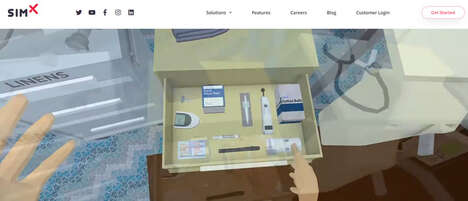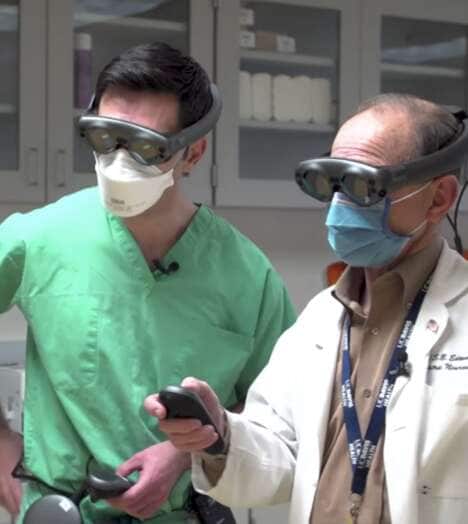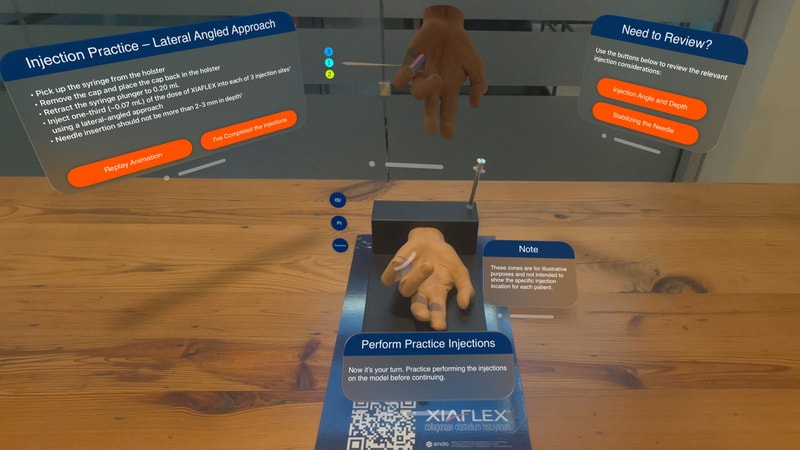
Endo's Spatial Computing Injection Simulator is intended to be an innovative training tool for medical professionals specializing in hand treatment. This launch marks the first time a pharmaceutical company has developed an external spatial computing application.
The Spatial Computing Injection Simulator merges augmented and physical reality, allowing physicians to practice administering XIAFLEX using a lifelike hand model paired with digital guidance via Apple Vision Pro. This is noteworthy as XIAFLEX is a nonsurgical treatment for Dupuytren’s contracture that involves precise injection into collagen cords to avoid complications. The mixed-reality environment provides real-time feedback on injection techniques, including proper needle angles and post-procedure care. As such, Endo's tool likely has implications for enhanced precision during actual patient treatments in the future.
The 20-minute simulation has already garnered significant interest, with over 600 specialists testing it at major medical conferences.
Image Credit: Endo
Why This Trend Is Growing
- Augmented-reality Medical Training
- The combination of augmented and physical reality in training tools offers medical professionals a groundbreaking approach for honing precise procedural techniques.
- Spatial Computing in Healthcare
- The introduction of spatial computing applications by pharmaceutical companies signifies the potential for immersive simulations to transform how medical treatments are practiced.
- Mixed-reality Feedback Systems
- The use of mixed-reality technologies to provide real-time feedback on medical procedures can revolutionize training by enhancing technique accuracy and patient outcomes.
Industries Being Reshaped
- Healthcare Technology
- The development of data-rich simulated environments for medical professionals represents a rapidly growing segment within healthcare technology that has the potential to redefine training methodologies.
- Pharmaceutical Innovation
- Pharmaceutical companies venturing into spatial computing applications highlight a trend towards integrating digital interventions with traditional medical practices.
- Medical Education
- Immersive training tools that simulate realistic treatment scenarios are steering innovation in medical education by fostering experiential learning.