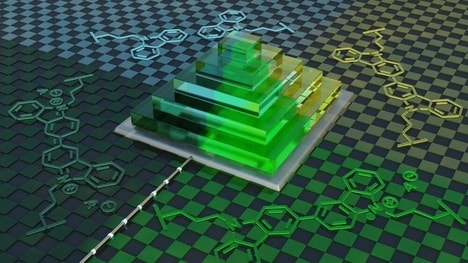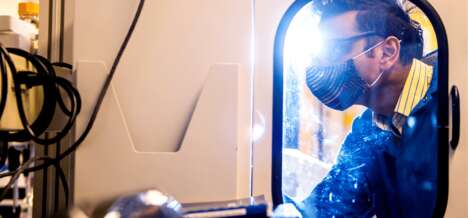

This 3D-printing resin has been developed by Assistant Professor Zak Page and colleagues from The University of Texas at Austin as a solution that draws natural inspiration for advanced results. The resin is inspired by materials like rigid bone that smoothly melds with cartilage to prioritize strength and flexibility, which will maximize overall versatility. The material is achieved with an epoxy–acrylate monomer that's paired with a photosensitizer compound, which can be augmented when used in a 3D printer with digital light processing (DLP) technology to augment its structure from solid to stretchy.
Page commented on the 3D-printing resin saying, "Nature does this in an organic way, combining hard and soft materials without failure at the interface. We wanted to replicate that."
Image Credit: The University of Texas at Austin
Key Themes Behind This Trend
- Nature-inspired Materials
- Nature-inspired materials draw on biological mechanisms to improve the adaptability of synthetic compounds, offering innovative ways to create multifunctional products with both strength and flexibility.
- Light-activated 3D Printing
- Light-activated 3D printing uses specific wavelengths to trigger structural changes in materials, enabling the creation of complex, responsive designs that can shift characteristics as needed.
- Meldable Material Technology
- Meldable material technology allows for the seamless combination of diverse material properties, promoting advancements in creating products with dynamic and customizable capabilities.
Where This Applies
- Biomimetic Engineering
- Biomimetic engineering employs the principles of natural design to solve complex manufacturing challenges, leading to innovations that enhance material performance in various applications.
- Additive Manufacturing
- The additive manufacturing industry benefits from novel resins like the light-activated type, transforming traditional methods by eliciting more versatile and adaptive production capabilities.
- Synthetic Material Science
- Synthetic material science explores new compositions like epoxy–acrylate monomers, unlocking potential for breakthrough materials that offer a balance of rigidity and elasticity.