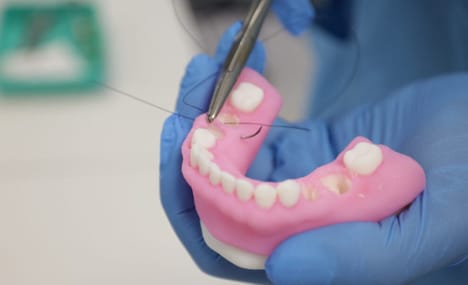
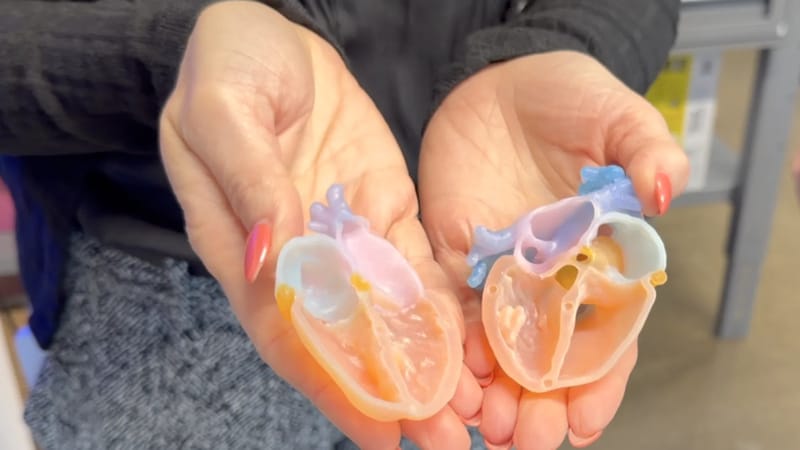
Clinical 3D printing is advancing personalized healthcare by bringing patient-specific anatomical modeling directly into hospital workflows. Indiana University Health's enhanced 3D Print Studio, developed with Ricoh 3D for Healthcare, enables clinicians to produce FDA-cleared anatomical models that improve diagnostic accuracy, surgical planning, and communication with patients and families. By allowing physicians to study complex anatomy before procedures, the technology can reduce operating times, improve device selection, and support more precise treatment strategies.
For healthcare providers, in-house 3D printing creates opportunities to streamline clinical workflows, expand medical training without cadavers, and improve collaboration across care teams. It also strengthens patient engagement by helping individuals better understand their diagnoses and treatment options through tangible models. As more hospitals adopt patient-specific manufacturing, clinical 3D printing is becoming an important tool for improving efficiency, precision, and the overall quality of care.
Image Credit: IU Health
Why This Trend Is Growing
- Patient-specific Modeling
- Hospital-based anatomical replicas are reshaping care pathways by making complex diagnoses, surgical planning, and patient communication more precise and personalized.
- In-house Medical Manufacturing
- Localized clinical production introduces new potential for faster turnaround times, reduced outsourcing dependency, and tighter integration between imaging, engineering, and care delivery.
- Cadaver-free Training
- Realistic 3D-printed anatomy expands medical education possibilities through repeatable, condition-specific simulations that support skill development without relying on donor tissue.
Industries Being Reshaped
- Healthcare
- Personalized 3D printing creates new value across hospitals by improving procedural preparation, diagnostic confidence, and multidisciplinary coordination.
- Medical Devices
- Anatomical models enable stronger device fitting, pre-procedure testing, and product refinement for companies developing implants, tools, and surgical systems.
- Medical Education
- Patient-derived printed models provide scalable learning assets for universities, teaching hospitals, and simulation centers focused on clinically relevant training.