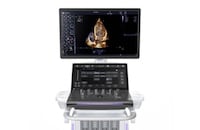

GE HealthCare has obtained regulatory clearance from the U.S. Food and Drug Administration for a new deep learning image reconstruction technology that promises to deliver clearer image quality in medical settings. The software application is dubbed the Pristina Recon DL and it will be used specifically in the context of three-dimensional mammography systems.
GE HealthCare's technology utilizes a form of artificial intelligence known as deep learning to process the raw data from a breast scan, with the objective of producing a clearer and more detailed final image for radiologists to review. The software employs two sequential AI models — one to reduce visual interference and noise in the 3D volume, and another to improve the clarity of specific clinical features in a synthesized 2D view. The company states that this advancement maintains the low radiation dose of the existing system while providing images that radiologists overwhelmingly preferred in internal studies.
Image Credit: GE HealthCare
Why This Trend Is Growing
- AI-enhanced Medical Imaging
- The integration of deep learning in medical imaging enables unprecedented clarity and detail, transforming diagnostic efforts and accuracy.
- Noise Reduction Algorithms
- Cutting-edge algorithms that minimize visual noise and interference in medical scans are essential for clearer diagnostic imaging.
- Low-dose Imaging Technology
- The application of AI to maintain low radiation doses while improving image quality represents a significant shift in patient safety paradigms.
Industries Being Reshaped
- Healthcare Technology
- Advancements in AI-driven medical imaging technology are revolutionizing diagnostic practices and enabling more precise medical interventions.
- Medical Imaging Equipment
- Enhanced imaging systems powered by deep learning are setting new standards for image quality and patient safety in diagnostic equipment manufacturing.
- Artificial Intelligence
- The use of AI to refine and improve medical imaging processes highlights its transformative impact across healthcare applications.