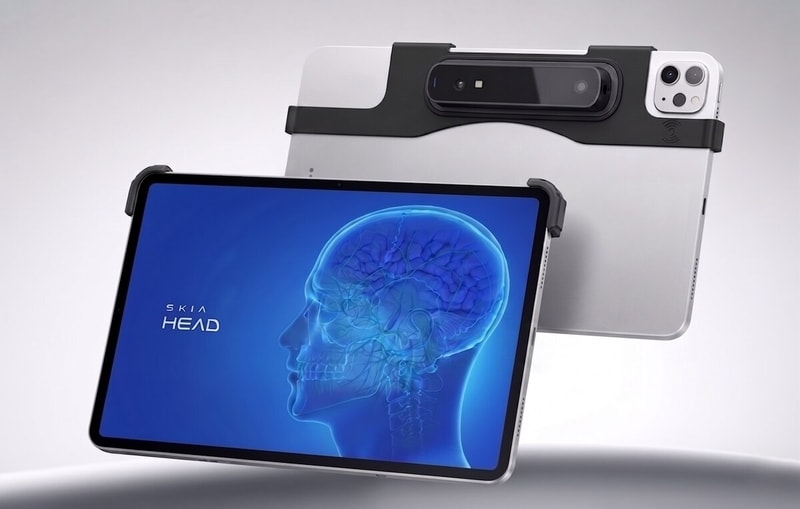
Portable AR Surgery is making advanced surgical guidance more accessible by replacing large, fixed navigation systems with compact, tablet-based platforms. SKIA HEAD uses augmented reality and 3D anatomical reconstructions generated from preoperative imaging to project patient-specific structures directly onto the body during procedures. Combined with Structure’s high-precision sensors, the system enables real-time visualization and accurate alignment without the need for bulky operating-room equipment. The FDA clearance also validates the technology for use within the U.S. healthcare market.
For healthcare providers and medical technology companies, this development highlights a shift toward more flexible and cost-effective surgical tools. Portable systems can lower equipment costs, simplify deployment, and expand access to advanced guidance capabilities for smaller hospitals and outpatient centers. The technology may also improve surgical precision, support clinician decision-making, and streamline workflows. As demand grows for scalable digital healthcare solutions, compact AR-guided platforms could accelerate the adoption of image-guided procedures across a broader range of clinical settings.
Image Credit: SKIA HEAD
Key Themes Behind This Trend
- Tablet-based Surgical Navigation
- Compact guidance platforms are reducing reliance on fixed operating-room systems while creating room for lower-cost, rapidly deployable surgical imaging solutions.
- Augmented-reality Clinical Workflows
- Patient-specific 3D overlays are reshaping intraoperative visualization by giving clinicians more contextual anatomical information at the point of care.
- Decentralized Image-guided Surgery
- Smaller hospitals and outpatient centers are gaining access to advanced procedural guidance as portable systems make precision surgery less dependent on major medical infrastructure.
Where This Applies
- Medical Devices
- Portable AR platforms are opening new product categories for sensor-enabled surgical tools that combine imaging, navigation, and real-time alignment in compact formats.
- Digital Health
- Scalable software-driven guidance systems are expanding the role of digital healthcare beyond diagnostics into procedure support and surgical decision-making.
- Hospital Technology
- Flexible operating-room equipment is shifting capital investment toward modular systems that can improve workflow efficiency across varied clinical environments.