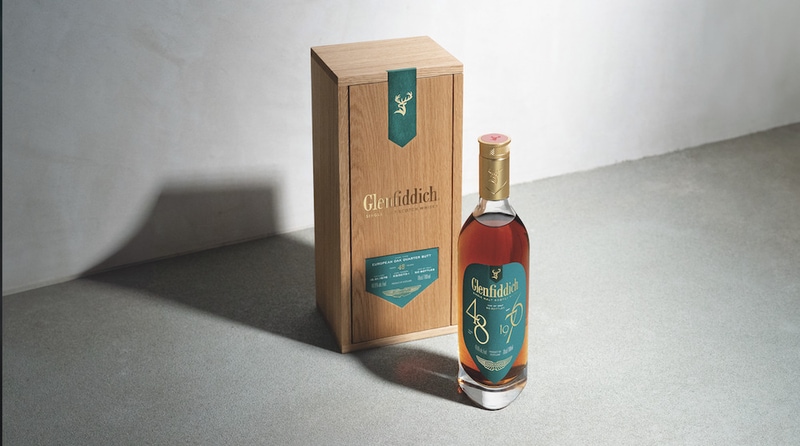
Glenfiddich has released an ultra-rare 1976 single malt Scotch whisky, with only 50 bottles available worldwide and a single bottle allocated to Alberta, Canada. This launch celebrates the iconic brand's expanded partnership as the Official Whisky Partner of Aston Martin.
The ultra-rare 1976 single malt Scotch whisky is aged for 48 years, first in a refill sherry cask and then finished in a 100-litre European oak sherry cask that was hand-selected by Malt Master Brian Kinsman. This aging process has resulted in a complex profile with red berry sweetness, buttery pastry notes, soft spice, dry oak tannin, stewed fruits, and a lingering sweet oak and spice finish at 48.8% alcohol by volume.
The extreme scarcity of only fifty bottles worldwide transforms this purchase from a simple consumable into a blue-chip collectible asset, as ultra-rare whiskies from celebrated distilleries have historically appreciated in value over time.
Image Credit: Glenfiddich
Key Themes Behind This Trend
- Liquid Luxury Collectibles
- The conversion of ultra-rare spirits into blue-chip collectibles is creating new asset classes that blend provenance, scarcity, and investment-grade valuation.
- Heritage Brand Collaborations
- Collaborations between legacy distilleries and luxury automotive brands are creating cross-category narrative value that elevates product prestige and secondary-market demand.
- Micro-batched Cask Innovation
- Hand-selected finishing casks and prolonged multi-cask aging are producing hyper-differentiated flavor profiles that enable premium pricing and provenance-based storytelling.
Where This Applies
- Luxury Goods and Collectibles
- The secondary-market appreciation of limited-run spirits is reshaping inventory valuation and customer segmentation within luxury goods and collectible marketplaces.
- Fine Wine and Spirits Market
- Ultra-rare releases are prompting shifts toward provenance tracking and authentication services in the fine wine and spirits supply chain.
- Technology-enabled Provenance Services
- Blockchain-backed provenance and tokenization platforms are emerging to certify authenticity and fractional ownership for high-value, low-volume consumables.