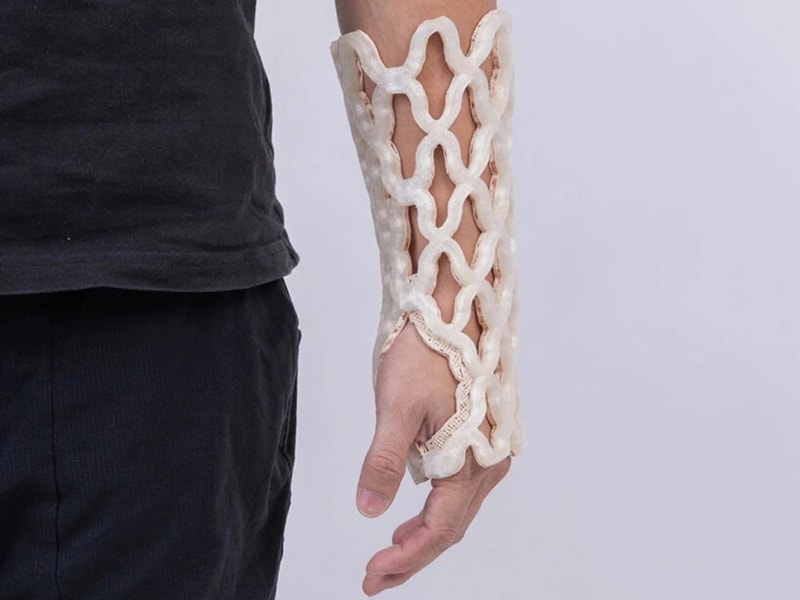
The TessaCast by Castomize is a 4D-printed orthopedic cast developed using thermoplastic materials that change state when heated. The cast is produced in a pre-formed lattice structure that becomes flexible during application, allowing clinicians to mould it directly around a patient’s limb. Once cooled, it hardens into a rigid support structure that maintains immobilisation while remaining lightweight and ventilated.
The open lattice design replaces traditional plaster or fiberglass wrapping with a perforated shell that allows airflow across the skin, reducing moisture buildup and irritation during recovery. The structure is fully waterproof, allowing patients to shower and even swim while wearing it, unlike conventional casts that require external coverings for water protection. The system uses a standardized sizing approach rather than requiring individual 3D scans for each patient.
Image Credit: Castomize
What Makes This Trend Stand Out
- 4d-printed Medical Wearables
- Devices that change mechanical properties with heat open possibilities for on-demand molding and reconfiguration of patient-specific supports without bespoke scanning.
- Lattice-based Ventilated Structures
- Perforated shell architectures promise reduced skin complications by enabling sustained airflow and moisture management within long-term wearable supports.
- Standardized Modular Sizing
- Using predefined sizes instead of individual 3D scans could streamline supply chains and allow mass-produced adaptive devices to fit a broad patient population.
Sectors Adopting This
- Orthopedic Care
- Lightweight, waterproof rigid supports could disrupt traditional casting by offering comparable immobilization with improved patient hygiene and comfort.
- Rehabilitation and Physical Therapy
- Breathable, reconfigurable wearables may change post-injury therapy protocols by enabling continuous use during daily activities and aquatic therapy.
- Medical Device Manufacturing
- Integration of thermoplastic 4D printing and lattice design could transform production models toward scalable, configurable inventories of adaptive support devices.