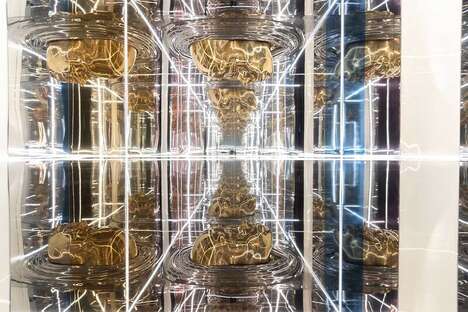
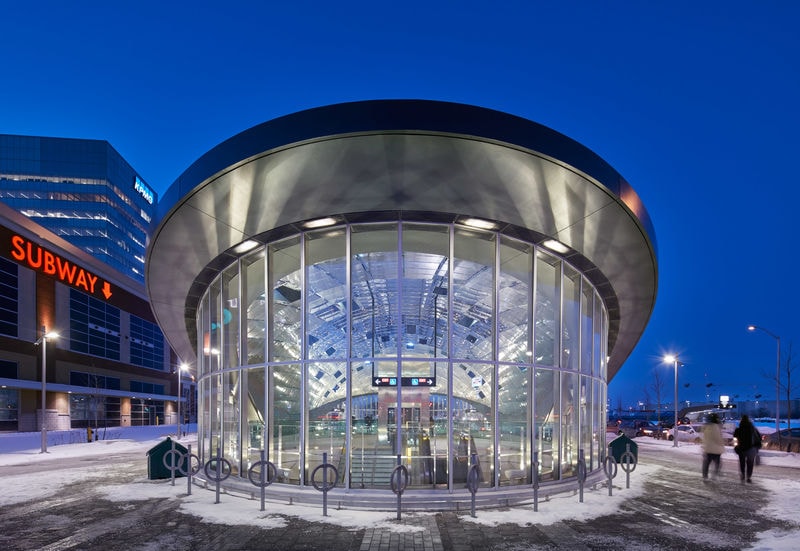
The newly extended Toronto subway system is showcasing an immersive curved mirrored ceiling design at its Vaughan Metropolitan Center station. Architecturally speaking, the space boasts a long elliptical structure with glass windows at each entrance. The design was established in collaboration between Grimshaw Architects, consultants from Arup and architects from Adamson Associates.
The mirrored ceiling carries a heavy metallic quality, which induces a sense of a futuristic sci-fi space. The arty interior is developed in partnership with Canada-based firm Paul Raff Studio. The nature of the glass material is able to reflect both natural and artificial light and, as a result, illuminate a great portion of the closed subway station system. To ensure the safety of passengers, Grimshaw Architects created a layout that has clear sight lines, as well as an abundance of walking routes.
Photo Credits: Shai Gil
Key Themes Behind This Trend
- Curved Mirrored Ceilings
- This trend in architecture and design offers opportunities for creating immersive and futuristic spaces.
- Reflective Glass Materials
- The use of glass materials that reflect both natural and artificial light opens up possibilities for illuminating closed spaces.
- Safe and Functional Layouts
- The design trend of clear sight lines and abundant walking routes prioritizes passenger safety and convenience.
Where This Applies
- Architecture and Design
- The architecture and design industry can leverage the trend of curved mirrored ceilings to create unique and visually striking spaces.
- Glass Manufacturing
- The glass manufacturing industry can explore the production of glass materials that have reflective properties for various applications, including architecture and design.
- Transportation
- The transportation industry, specifically subway systems, can incorporate the trend of safe and functional layouts to enhance passenger experience and safety.