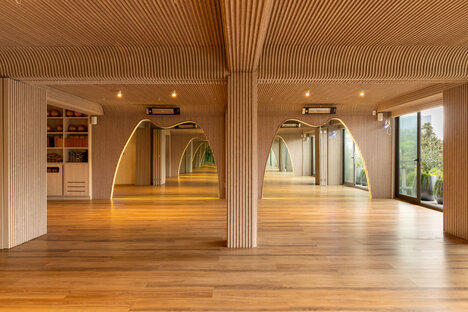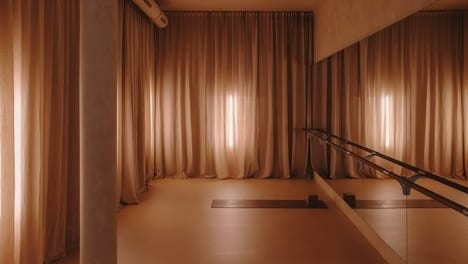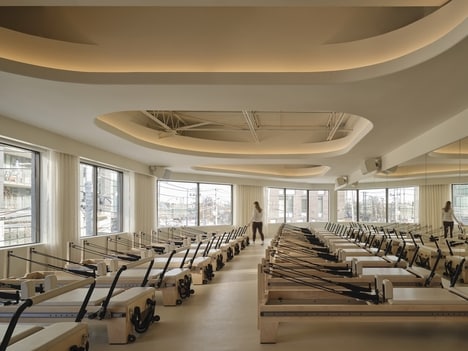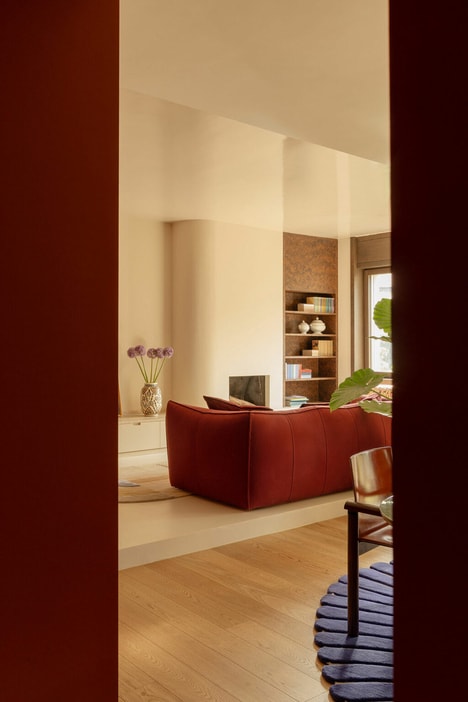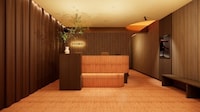
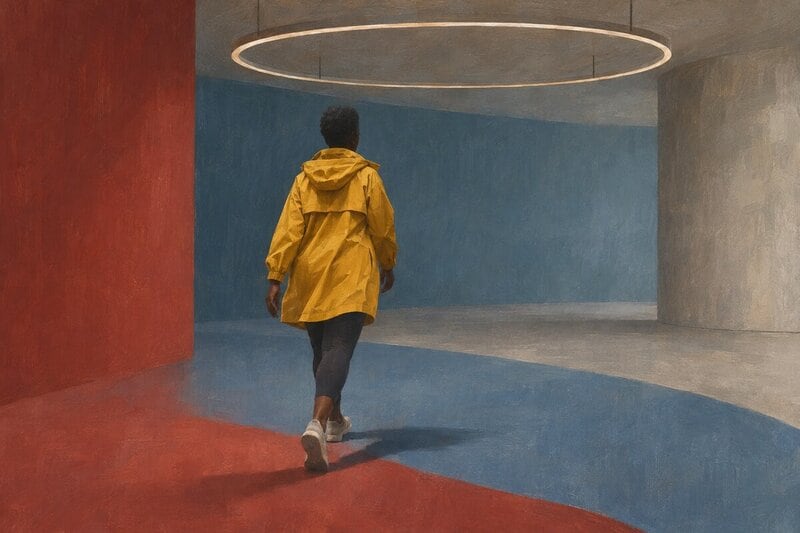
JOTAJOTA+ designed 'Movebon,' a 126-sqm training studio in Madrid, to separate the workout floor from service rooms without rebuilding the structure. Movement threads around the existing supports, while two full-height street windows bring in daylight and put the main room on view from the sidewalk.
An elliptical band of tubular lighting traces the ceiling to guide circulation, and brown-red floor and ceiling planes draw the eye toward a new concrete-block wall at the back. Lime-washed brick tempers that zone, the changing rooms shift to traffic blue, and custom timber-and-steel fixtures combine storage with training gear.
JOTAJOTA+ shows how color zoning, street-facing glazing and built-in fixtures can organize a 126-sqm studio around existing supports without a structural overhaul, using an elliptical lighting band, brown-red planes and a new concrete-block wall.
Image Credit: AI-generated
What's Driving This Trend
- Color-zoned Fitness Spaces
- Distinct chromatic zones create intuitive wayfinding and spatial separation in compact studios, opening possibilities for low-cost interior transformations without structural renovation.
- Street-facing Workout Studios
- Large windows that expose training areas to the sidewalk turn fitness interiors into visible brand experiences, supporting new models of community engagement and passive marketing.
- Integrated Training Fixtures
- Custom storage, equipment, and architectural elements merged into built-in fixtures can maximize small footprints while redefining how boutique gyms balance utility and design.
Who This Affects Most
- Boutique Fitness
- Compact studios are increasingly differentiated through immersive interiors, creating opportunities for premium wellness brands to compete through spatial identity rather than scale.
- Interior Architecture
- Adaptive design strategies using lighting, color, and materials allow designers to reorganize existing commercial spaces with minimal construction impact.
- Commercial Real Estate
- Small urban units with strong street visibility can be repositioned as high-value wellness destinations through design-led tenant improvements.
Featured Reports

The Next Innovation Frontier Is Sensory Depth

Verified Economy