



From Optimization to Verification
For more than a decade, digital innovation has been driven by optimization, with brands competing to deliver faster recommendations, smoother customer journeys, hyper-personalized experiences and increasingly polished content. However, as artificial intelligence accelerates this pursuit, the digital landscape has reached a point of saturation. Consumers are now navigating a world of synthetic abundance, where AI-generated content, algorithmic recommendations and automated interactions are becoming nearly indistinguishable from human creation. In this environment, trust has become harder to earn.
Rather than questioning whether technology can produce convincing experiences, consumers are increasingly questioning whether those experiences are real. This growing sense of human uncertainty is reshaping expectations across industries, shifting attention away from perfection and efficiency toward authenticity, transparency and proof. Today, the brands building the strongest consumer relationships are not necessarily the most optimized, but the ones that feel the most verifiable, imperfect and human.
The Authenticity Audit
The Authenticity Audit reflects a broader pattern in which consumers are recalibrating their relationship with technology, shifting from optimization to verification. This emerging Verified Economy is defined by a growing demand for signals of humanity, tactility, imperfection and proof-of-realness. Earlier digital eras prioritized aspiration and polish, followed by a social era centered on performance, branding and visibility.
In contrast, the AI era introduces skepticism toward perfection and synthetic content, creating a cultural pivot toward human verification as a trust signal. According to Trend Hunter's Authenticity Audit Survey by Survey Fast, 72% of consumers say that trusting brands is harder than ever and only 1 in 5 actually trust brand content online.
As a result, consumers are effectively auditing realidty itself, evaluating whether experiences, creators and products feel grounded rather than generated. As digital systems become frictionless and predictive, value shifts toward what feels intentional, tactile, local, emotional and imperfect. The Authenticity Audit captures this evolution: a move away from seamless automation and toward experiences that carry the texture of human authorship.
Human signals in digital culture
As AI-generated content becomes increasingly sophisticated, consumers are beginning to value the signals that technology struggles to replicate: imperfection, spontaneity, vulnerability and a genuine human presence. Rather than aspiring to highly curated aesthetics, digital culture is shifting toward low-production content, niche communities and creators whose value stems from authenticity rather than polish. Consumers increasingly interpret visible imperfections, unconventional perspectives and community participation as indicators of credibility, making human identity itself a differentiator in an increasingly synthetic online environment.
Trend Hunter has identified this shift through emerging signals such as Messy Authenticity and Imperfect Marketing, in which creators and brands alike intentionally embrace unfiltered and emotionally candid content that rejects the polished aesthetics of the social media era. Likewise, the rise of Body Doubling demonstrates how audiences are prioritizing genuine companionship over performative productivity, with creators livestreaming everyday tasks to foster accountability, emotional support and shared presence rather than entertainment alone.
Together with lo-fi creator culture, niche identity tribes and softer forms of parasocial interaction, these behaviors suggest that authenticity is becoming less about appearance and more about relational transparency, with consumers gravitating toward creators, brands and communities that feel emotionally accessible rather than algorithmically optimized.
Rather than pursuing flawless execution, brands should design for credibility by embracing transparency, showcasing real people and creating opportunities for authentic dialogue. In the Verified Economy, emotional realism becomes a stronger trust signal than digital perfection.
Analog behaviors and intentional friction
Analog behaviors and intentional friction are becoming defining signals of the post-automation era, where consumers seek grounding, tactility and sensory presence as antidotes to digital fatigue. This shift is visible in the rise of analog hobbies in younger generations, from needlepoint communities to gardening and even more advanced hobbies like blacksmithing that emphasize skill, patience and shared craft.
Retro and simplified devices are gaining cultural relevance not because they outperform modern tools, but because they introduce purposeful constraint, nostalgia and focused features rather than sensory overload. At the same time, offline wellness practices such as screen-free retreats and analog rituals like hand-written planning reflect a desire for cognitive decompression and embodied presence.
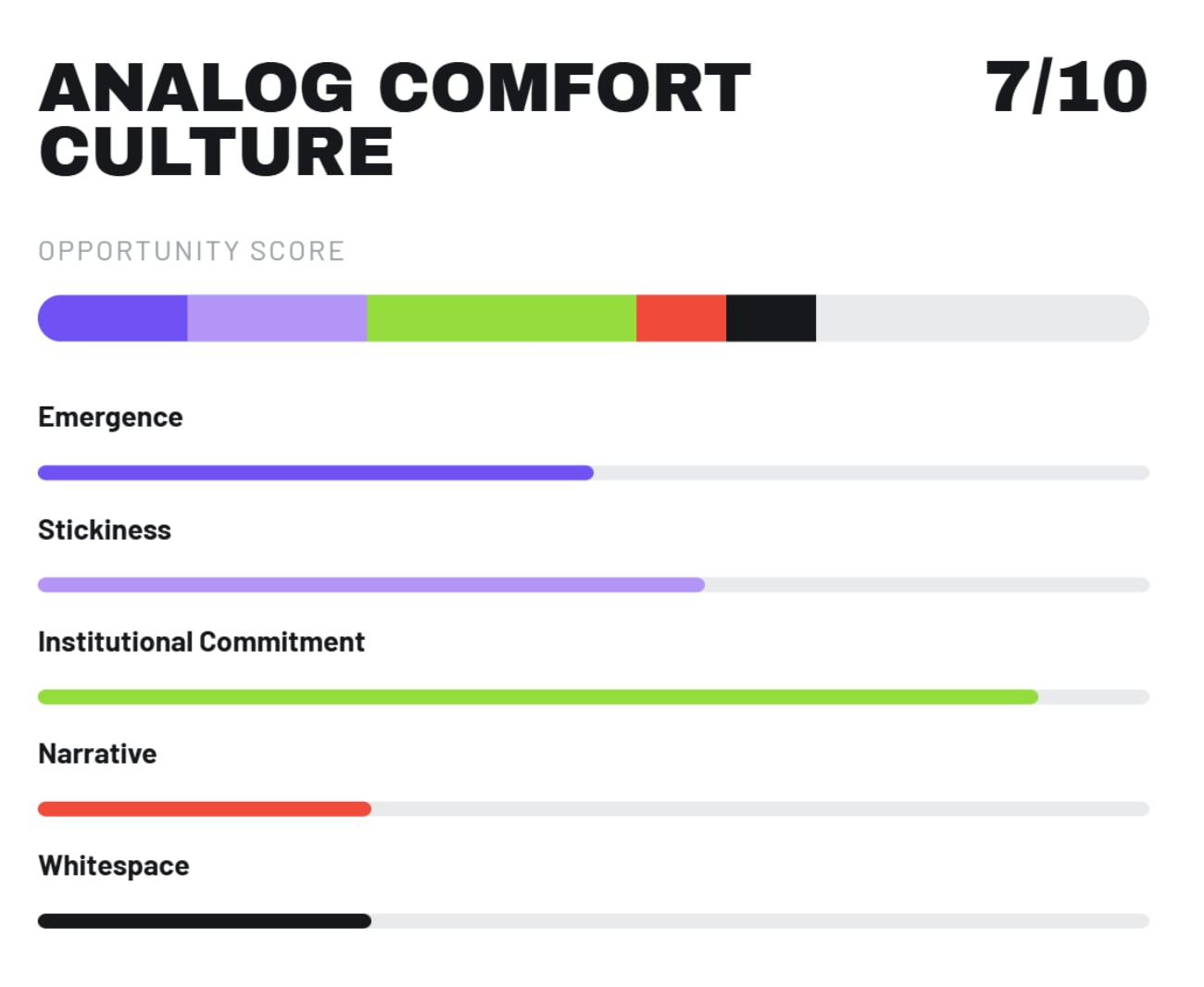
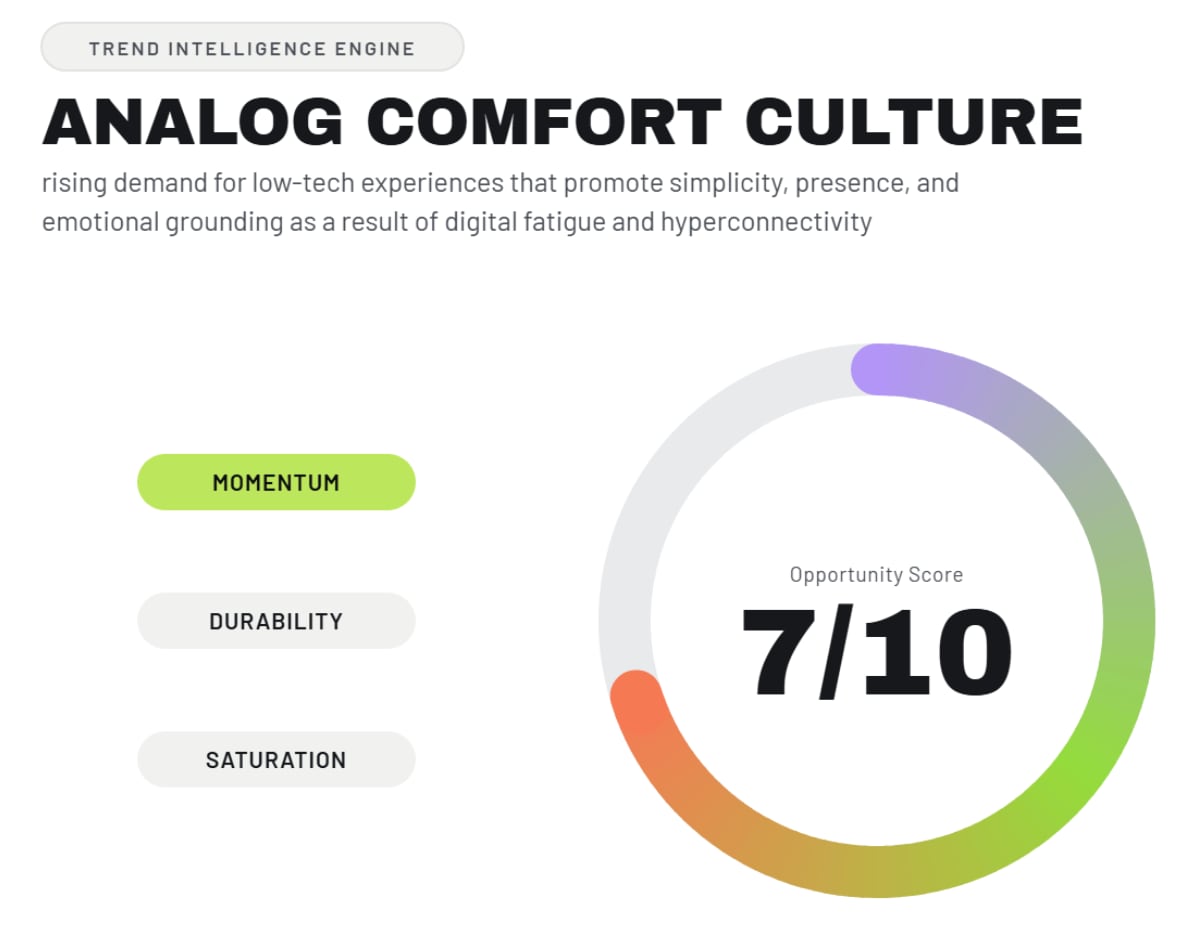
Handmade and DIY culture further reinforce this movement, where functional imperfection becomes a marker of authenticity rather than inefficiency. Identified by Trend Hunter's Trend Intelligence Engine, the Analog Comfort Culture signal illustrates how friction is being reframed as a feature rather than a flaw.
As consumers experience growing digital fatigue and hyperconnectivity, they are increasingly gravitating toward low-tech experiences that encourage presence, sensory engagement and emotional grounding. Rather than eliminating every point of effort, brands have an opportunity to intentionally incorporate tactile rituals, slower interactions and moments of discovery that feel more authentic and memorable. Supported by strong institutional commitment, the opportunity lies in designing experiences that prioritize human variability and meaningful engagement over pure optimization and technological advancement.
Trend Hunter
Verified consumption and human-made value
Shutterstock / TheThunks
The meaning of premium is being redefined. Rather than equating value with speed, scale or technological sophistication, consumers increasingly reward products and experiences that reveal human effort, craftsmanship and intentionality.
Transparent sourcing, local production and visible creative processes have become indicators of quality because they communicate care rather than convenience. Human contribution itself is emerging as a competitive advantage, with consumers seeking reassurance that what they purchase reflects expertise, authenticity and genuine participation instead of anonymous or fully automated production.
Trend Hunter presents this shift through experiences that prioritize participation, craftsmanship and real-world connection over passive consumption. Maker Experience demonstrates growing demand for hands-on creation, while Offline Oasis reflects a preference for immersive, screen-free environments that extend into IRL-first wellness, chef-curated dining and locally produced experiences. This same demand for verification is reshaping retail. E-commerce brand Vestiaire Collective reinforces trust by physically authenticating every luxury resale item before it is sold, providing independent verification in a category where authenticity is essential. Similarly, Bookshop.org makes local bookstore support visible by showing consumers exactly where their purchases go, transforming spending into a transparent act of community investment rather than an anonymous online transaction.
The demand for verification is also reshaping personal care and beauty. Provenance's Digital Product Passports enable consumers to verify sourcing, manufacturing, sustainability claims and authenticity through blockchain-backed records. The Ordinary builds trust by making ingredient percentages, formulations and pricing rationale transparent, allowing consumers to assess value through ingredient literacy. Meanwhile, Lush's Digital Ethics strategy positions transparency and responsible digital practices as part of its brand identity. Together with Literary Edge, which highlights the desire for niche communities within offline, literary spaces, these examples demonstrate that premium value increasingly stems from visible human effort, transparency and verifiable authenticity rather than convenience or automation.
As a result, brands should make human contribution visible rather than invisible. By designing opportunities for participation, showcasing craftsmanship and celebrating the individuals behind products and experiences, organizations can transform transparency into a lasting competitive advantage within the Verified Economy.
Conclusion and business action
The Verified Economy signals a future where trust is earned through visibility rather than assumed through efficiency. As AI continues to automate creation, personalization and decision-making, brands will increasingly compete by making human contribution more apparent—not less.
Verification systems may extend beyond technical authentication to include proof of provenance, craftsmanship, local sourcing, creative process and community participation, transforming "human-certified" experiences into valuable markers of credibility. While automation will continue to operate behind the scenes, the brands that stand out will intentionally surface the people, stories and imperfections that technology cannot replicate. In the next era of commerce and content, humanity will become a strategic differentiator rather than an operational constraint.
Workshop Question: How is your brand proving its humanity in an era where everything can be artificially generated?
Interested in Survey Fast? Quickly validate your ideas, products or messaging with real consumer feedback. Learn more here and launch your custom survey today.