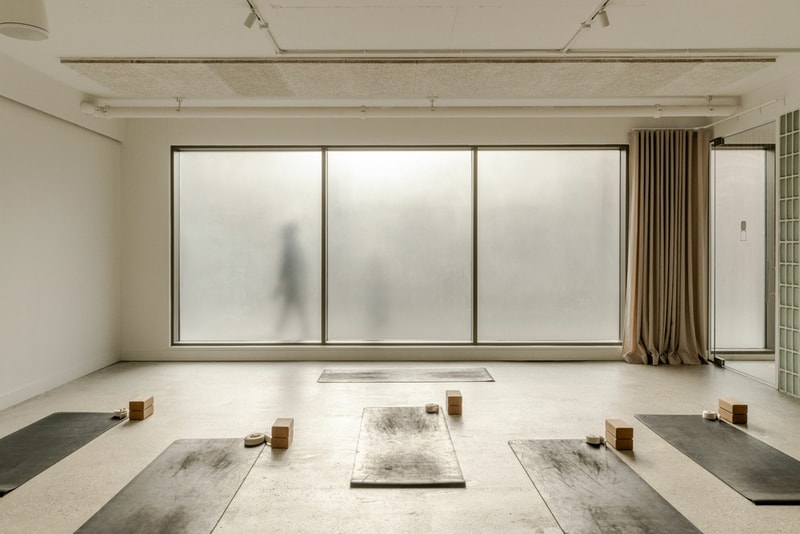
Basic Space Camberwell is a yoga and Pilates studio in South London designed by Matt Hepburn of haat studio as a neighborhood-focused practice space. The layout is organized around a reception area, main studio, and a secondary room with reformer machines positioned toward the rear. A wall of elongated frosted glass blocks separates the entrance from the practice areas, filtering daylight while maintaining visual privacy from the street.
The interior uses a restrained palette of polished concrete flooring, birch plywood storage, natural linen curtains, and organic plaster surfaces. A sculptural plaster desk anchors the reception, while open shelving displays mats, props, and towels in structured arrangements. Full-height glazing introduces light into the main studio, softened through translucent treatments and curtains that can enclose the space. Additional elements include ceramic-tiled changing rooms and exposed ceiling systems that leave structural components visible throughout.
Image Credit: Basic Space
Why This Trend Is Growing
- Neighborhood Wellness Hubs
- Localized studios combining exercise, recovery, and social spaces present opportunities for hyper-local membership models and communal programming that redefines urban wellness access.
- Integrated Recovery-fitness Design
- Co-located training and recovery equipment in compact footprints enables novel service bundles and modular space strategies that blur lines between therapy and fitness.
- Transparent-private Spatial Planning
- Use of frosted glazing and adaptable curtains creates layered visibility solutions that allow simultaneous public engagement and private practice within single venues.
Industries Being Reshaped
- Fitness and Boutique Studios
- Small-scale studios can leverage integrated amenities and curated aesthetics to differentiate offerings and cultivate neighborhood loyalty beyond traditional gym models.
- Architecture and Interior Design
- Design firms focusing on material restraint and flexible partitions are positioned to deliver multiuse community spaces that respond to evolving wellness behaviors.
- Wellness Product Retail
- Retailers of mats, props, and recovery tools can explore subscription and on-site display ecosystems that support experiential retail within community-focused studios.