With the many advancements in additive manufacturing, it's no longer unheard of large-scale 3D printing systems that can create everything from car bodies to tires and even rocket engines. However, Boeing is looking even further to the future with a new system that will be able to print Aircraft parts that are suspended in space.
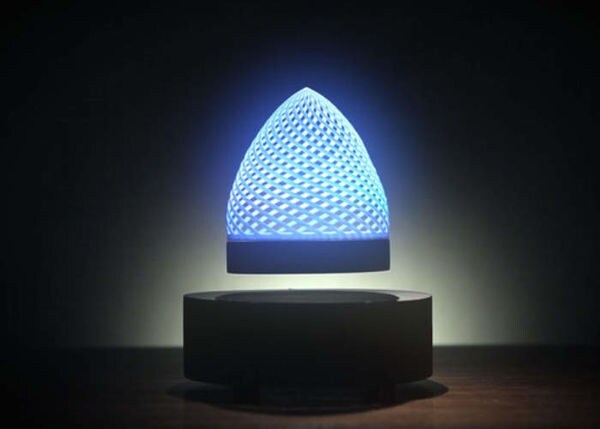
Boeing recently patented the system, which would involve multiple 3D printers, magnetics and a free-floating printing object. Formally, this patent from the aerospace company is known as a 'Free-Form Spatial 3-D Printing Using Part Levitation.'
This idea presents entirely new way to print objects. The use of more than one extruder and a levitating 3D printing platform could have huge implementations for the travel and transportation industry and beyond.
Why This Trend Is Growing
- Levitating 3D Printing Systems
- Disruptive innovation opportunity: Revolutionize the additive manufacturing industry by enabling the printing of complex objects in a suspended state.
- Large-scale 3D Printing Systems
- Disruptive innovation opportunity: Transform various industries by enabling the creation of entire products, such as car bodies and rocket engines, through 3D printing.
- Free-form Spatial 3D Printing
- Disruptive innovation opportunity: Introduce a completely new approach to object printing by using multiple extruders and a levitating platform.
Industries Being Reshaped
- Aerospace
- Disruptive innovation opportunity: Enhance aircraft manufacturing by printing suspension parts, potentially reducing weight and improving performance.
- Automotive
- Disruptive innovation opportunity: Streamline car manufacturing processes by leveraging large-scale 3D printing systems to create full car bodies.
- Transportation
- Disruptive innovation opportunity: Revolutionize transportation industries by utilizing levitating 3D printing systems to produce lightweight and efficient components.