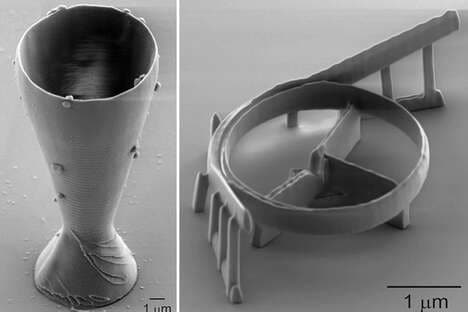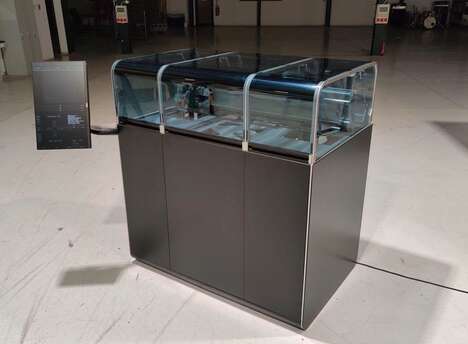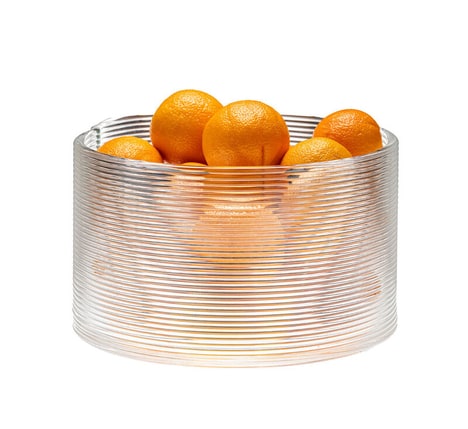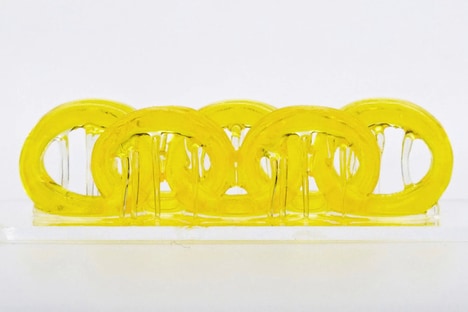
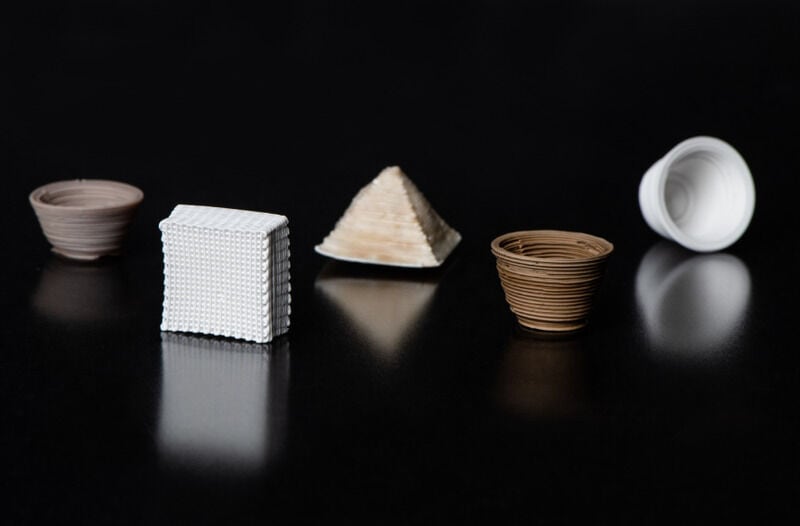
Researchers at MIT Lincoln Laboratory have developed a new 3D-printing technique that can create complex glass structures without heating them to high temperatures. The technique uses a special ink made of water glass and particle components that can be extruded in a filament form and printed layer by layer.
After printing, the glass structure is submerged in a mineral oil bath to evaporate the water and harden the glass. The technique can enable glass to be integrated with temperature-sensitive microelectronics, such as silicon-based devices because it does not require heating above 250°C.
The technique can also produce glass with unique optical, electrical, and chemical properties by embedding nanoparticles or other additives in the ink. The Lincoln Laboratory is currently patent-pending on this technology, as it is a revolutionary breakthrough in 3D printing for complex glass structures.
Image Credit: Nicole Fandel
What Makes This Trend Stand Out
- Low-temperature 3D Printing
- This trend offers an opportunity for companies to invest in research and development of new low-temperature materials that can be used for 3D printing.
- Additive Manufacturing for Glass Products
- This trend presents an opportunity for additive manufacturing companies to explore the development of glass-based products and to discover ways to create complex shapes on par with traditionally-manufactured glass products.
- Nano-additives for Advanced Glass Properties
- This trend provides an opportunity for businesses to explore using nano-additives to create unique and advanced optical, electrical, and chemical properties in glass products.
Sectors Adopting This
- Microelectronics Industry
- This industry can benefit from low-temperature 3D printing technology, as it will allow for complex glass structures to be integrated into temperature-sensitive microelectronics.
- Architecture and Construction Industry
- This industry can benefit from the ability to 3D-print complex glass structures, allowing for increased design flexibility and unique shapes in architectural and construction projects.
- Glass Manufacturing Industry
- This industry can explore using additive manufacturing techniques to create new glass products with unique shapes and properties, and to optimize their manufacturing process to improve efficiency.