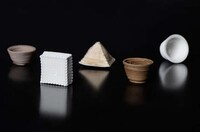
Glass is one of the oldest and most versatile materials in human history, but it has also been one of the most challenging to shape and manipulate. Traditional glass forming techniques are limited by the high temperatures and complex molds required to produce transparent and complex structures.
However, a research team at MIT Media Lab has developed a novel additive manufacturing platform that enables 3D printing of optically transparent glass at architectural scales. The platform, called G3DP 2, builds upon their previous work on G3DP, which was the first 3D printer for glass.
G3DP 2 uses a dual-heated chamber system that continuously deposits up to 30 kg of molten glass through a ceramic nozzle. The nozzle is designed to prevent wetting, which is the unwanted adhesion of glass to the nozzle surface. The platform also features a four-axis motion control system that allows precise control of the shape, transparency and color of the printed glass structures.
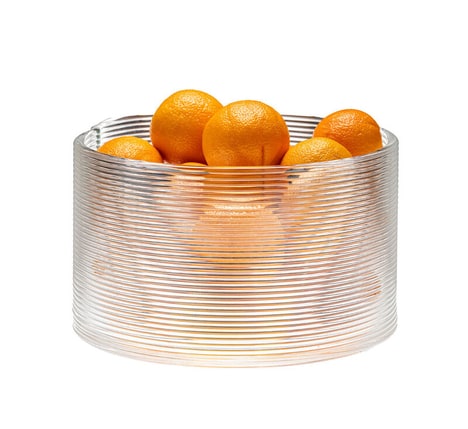
The researchers claim that G3DP 2 opens up new possibilities for digital design and fabrication with glass, as it can create tunable optical and mechanical properties that are not achievable with conventional methods. The platform can also print large-scale glass components that can be used for various applications, such as architecture, art, lighting and furniture.
Image Credit: Oxman, MIT Media Lab
Key Themes Behind This Trend
- Transparent Glass Printing
- G3DP 2 technology enables 3D printing of optically transparent glass at architectural scales, opening up new possibilities for digital design and fabrication with glass.
- Tunable Optical and Mechanical Properties
- G3DP 2 can create tunable optical and mechanical properties that are not achievable with conventional glass forming techniques for disruptive innovations in varied applications.
- Large-scale Glass Components
- G3DP 2 can print large-scale glass components that can be used for architecture and furniture, presenting new opportunities for disruptive innovation.
Where This Applies
- Architecture
- G3DP 2 technology has revolutionized the production of glass that can be used for large-scale architectural projects for disruptive innovation.
- Art
- G3DP 2 technology presents disruptive innovation opportunities for artists looking to create complex and precise glass artworks.
- Furniture
- G3DP 2 technology has the potential to disrupt furniture manufacturing by allowing customized glass components to be quickly and efficiently produced.