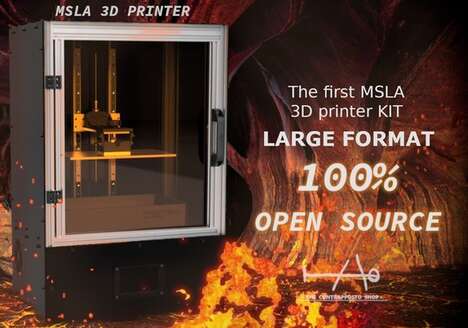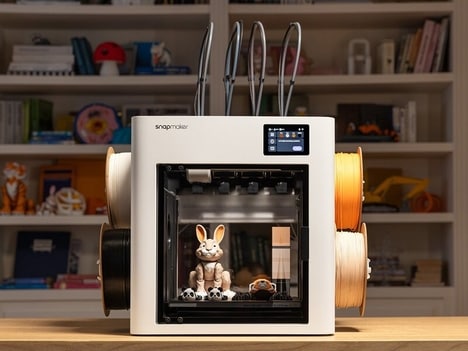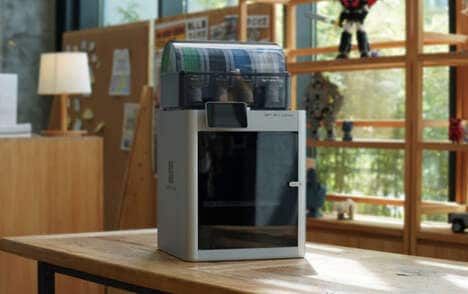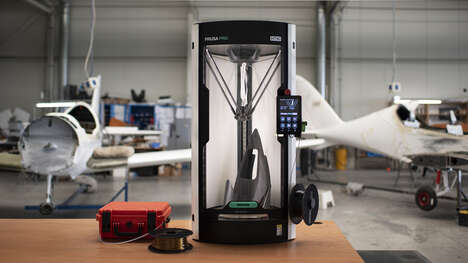
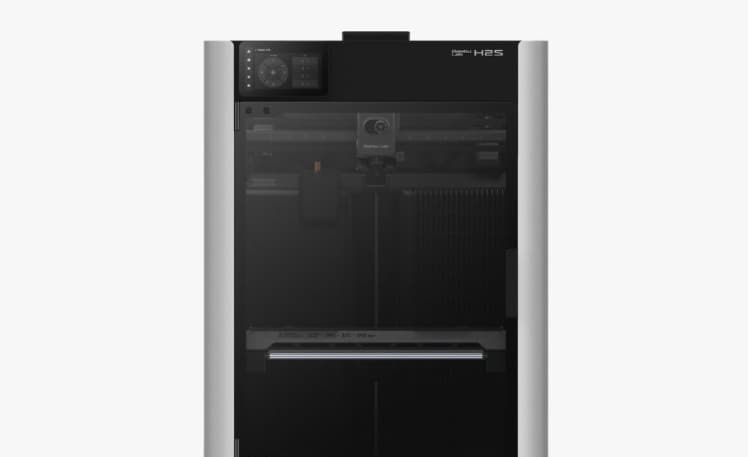
The Bambu Lab H2S is a large-format 3D printer designed for high-speed, high-precision manufacturing, featuring a build volume of 340 × 320 × 340 mm and toolhead speeds up to 1,000 mm/s with accelerations of 20,000 mm/s². Its proprietary permanent magnet synchronous motor (PMSM) servo extrusion system delivers 67 percent more force than standard stepper motors, enabling consistent filament flow and reducing print times by up to 30 percent compared to the X1 Carbon. The printer employs a Vision Encoder for real-time mechanical drift compensation, achieving motion accuracy under 50 μm, and Auto Hole/Contour Compensation to maintain machine-shop tolerances on dimensional features. Thermal management supports a 350 °C hotend and a 65 °C actively heated chamber, allowing both standard and engineering filaments to be printed with minimal warping and enhanced layer adhesion.
Beyond its core 3D printing capabilities, the H2S integrates 23 sensors and three onboard cameras driven by AI detection to monitor for clogs, filament grinding, and purge-chute jams, and initiates a comprehensive pre-flight checklist to verify chamber integrity and hardware configuration before each operation. It also offers laser cutting, engraving, and drawing functions via a 10 W 455 nm laser, seamlessly switching between modes through automated venting and airflow control. Connectivity options include cloud-based remote control and fully offline operation for security-sensitive environments, while Developer Mode unlocks MQTT access for third-party integration. The all-metal die-cast chassis, quick-swap nozzle system, and sub-50 dB noise profile make the H2S a versatile, production-ready platform for demanding prototyping and small-batch manufacturing applications.
Image Credit: Bambu Lab
What's Driving This Trend
- Multi-function 3D Printers
- Machines that combine 3D printing with additional capabilities like laser cutting and engraving present opportunities for streamlined prototyping and manufacturing processes.
- AI-enhanced 3D Printing
- The integration of AI-driven monitoring systems in 3D printers provides enhanced precision and reliability, optimizing workflow efficiency and reducing the need for manual oversight.
- High-speed Additive Manufacturing
- Advancements in servo motor technology and thermal management in 3D printing pave the way for faster production speeds and greater product fidelity in manufacturing.
Who This Affects Most
- Advanced Manufacturing
- The evolution of large-format 3D printers into multi-functional platforms signals a shift towards more adaptable and versatile production lines in manufacturing.
- Aerospace and Automotive
- High-precision 3D printing with engineering filaments offers significant potential for prototyping and producing intricate components in the aerospace and automotive sectors.
- Smart Home Tech
- The convergence of AI and IoT in home-based industrial solutions enables remote operation and advanced functionality, appealing to tech-savvy consumers and professionals.