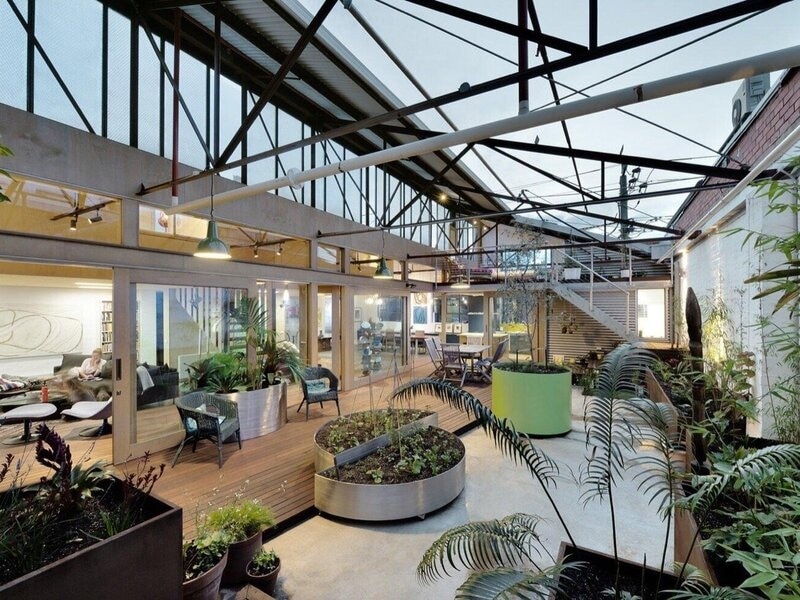
A 1960s warehouse has been transformed into a contemporary home that embraces its industrial identity instead of concealing it. The renovation preserves original features such as concrete floors, steel trusses, and exposed beams, allowing the building’s history to shape its new domestic atmosphere. High ceilings and open layouts maintain the warehouse’s sense of scale while introducing warmth through natural light and carefully balanced materials. The result is a living space that feels both grounded and expansive.
There are large windows and minimal partitions that encourage a flow of movement and sightlines throughout the home. Custom furniture and subtle finishes in wood and metal provide contrast without overpowering the original framework. The project demonstrates how adaptive reuse can preserve authenticity while creating comfort, turning a former workspace into a refined example of industrial living.
Image Credit: Zen Architects
Key Themes Behind This Trend
- Adaptive Reuse Innovation
- Repurposing industrial spaces into residential homes showcases how historical elements can be preserved to create unique living environments.
- Industrial Aesthetic Interiors
- Embracing and highlighting raw, unfinished materials like steel and concrete supports a growing trend for interiors that prioritize authenticity and character.
- Open-plan Living Spaces
- The adoption of minimal partitions and large windows fosters a movement towards living spaces that prioritize openness and fluid sightlines.
Where This Applies
- Real Estate Development
- There is potential within commercial and industrial real estate to be transformed into residential properties that harness the history and character of the original buildings.
- Interior Design
- A shift towards styles that incorporate the raw finishes and structural elements of industrial buildings is transforming contemporary interior design practices.
- Furniture and Home Decor
- The demand for custom furniture that complements industrial aesthetics is driving innovation within the home furnishings sector.