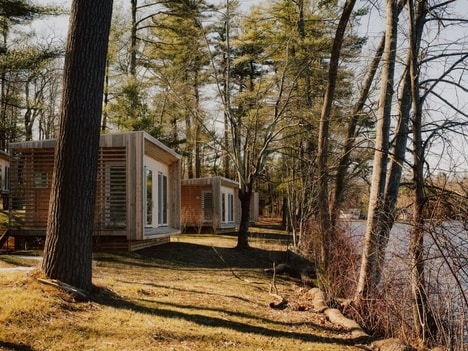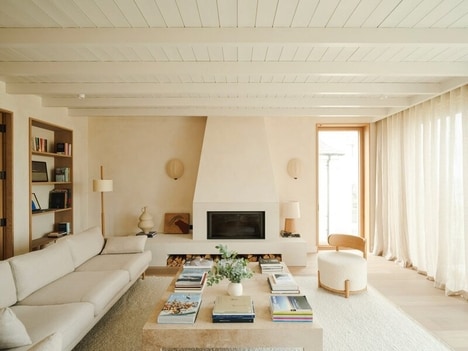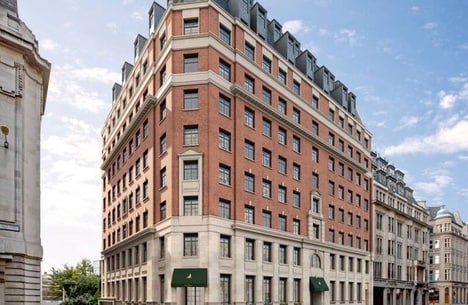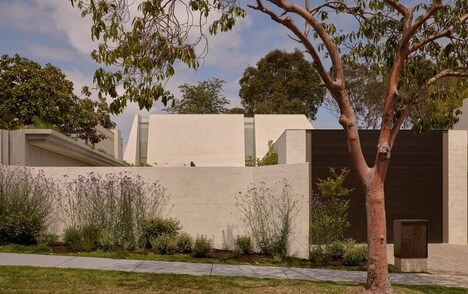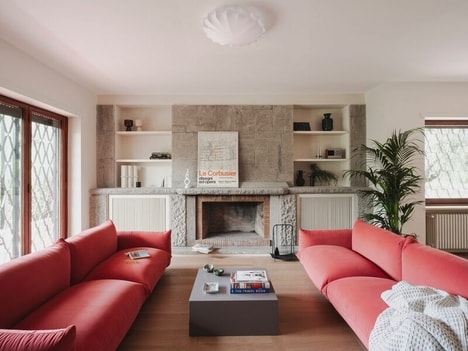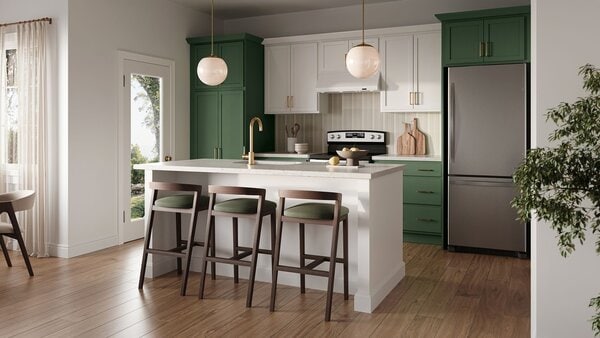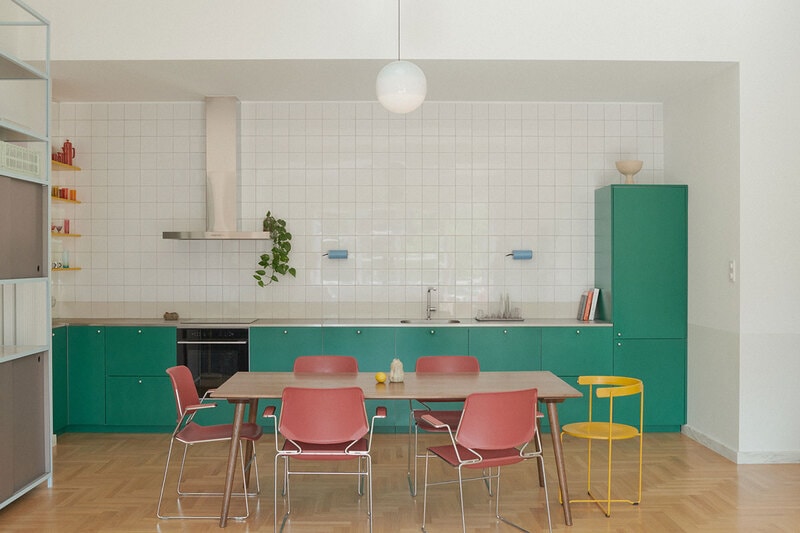
This Bauhaus Budapest Apartment receives a contemporary refresh by reworking a 1930s villa interior into a clean, modern living space while retaining key architectural features. Designer Sarolta Huttl preserved the original metal-framed windows and open sightlines, then introduced new partitions, white surfaces and oak flooring to clarify circulation. The kitchen incorporates teal cabinetry, white tile and mixed-color seating that adds contrast within the otherwise restrained palette, while the bedroom uses a glazed wardrobe wall to extend natural light deeper into the layout.
The renovation balances historic structure with practical modern use through materials such as concrete tiles, handmade cement finishes and colored Valchromat panels. The updated floor plan connects the living, dining and kitchen zones to support family interaction without erasing the apartment’s period identity. By merging restored elements with calibrated new interventions, the project demonstrates how modernist forms can be adapted to current needs while keeping their original character visible and relevant.
Image Credit: Sarolta Huttl
What's Driving This Trend
- Heritage Preservation
- Design strategies that integrate historical features with modern living spaces are gaining traction, allowing for timeless aesthetics with updated functionality.
- Sustainable Renovation
- Emphasizing the use of eco-conscious materials like concrete tiles and Valchromat panels, modern renovations are focusing on reducing environmental impact while enhancing property value.
- Adaptive Reuse
- The trend of repurposing existing structures into multi-functional spaces points to a shift in architectural practices that favor sustainability and historical continuity.
Who This Affects Most
- Interior Design
- A growing demand for merging historic charm with contemporary living needs is reshaping the interior design industry, requiring innovative solutions for seamless integration.
- Architecture
- Modern architectural projects are increasingly exploring the revival of classic design principles adapted for present-day use, revealing opportunities for creative restoration approaches.
- Real Estate
- Real estate sectors are recognizing the increased value of properties that skillfully blend period features with modern amenities, appealing to discerning buyers seeking unique living experiences.