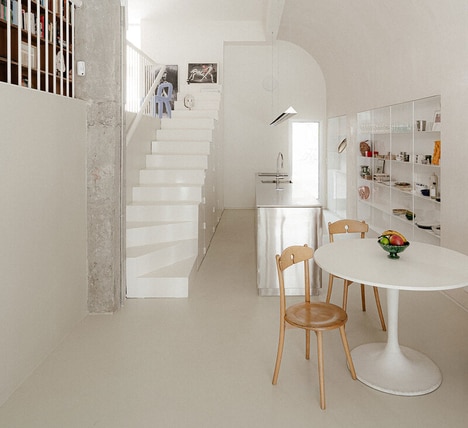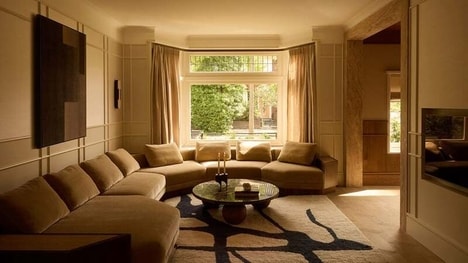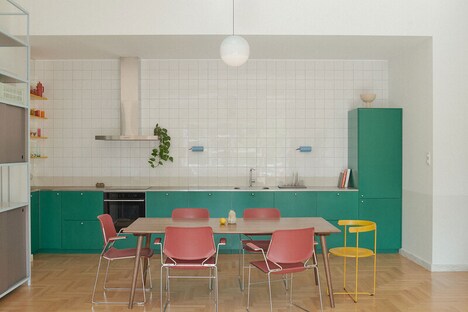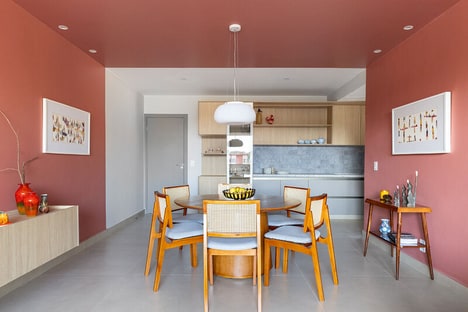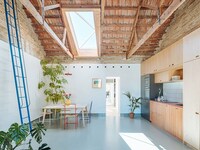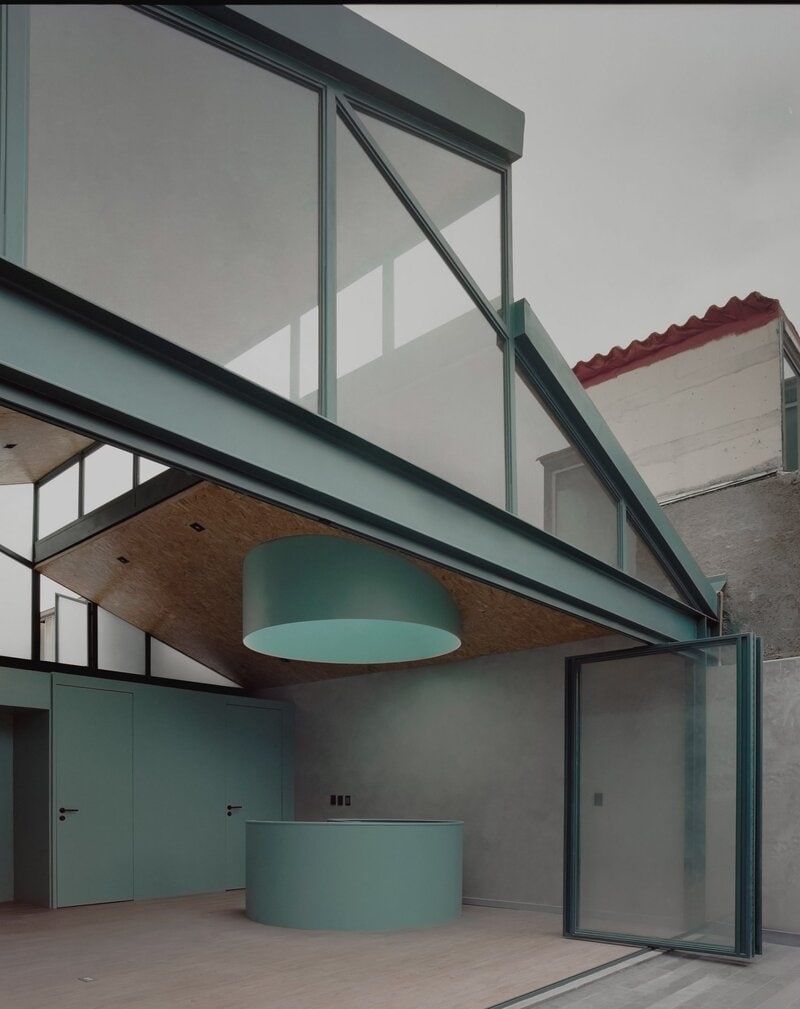
The Casa Sofia renovation by AMASA Estudio reclaims a long-vacant property in Mexico City’s Colonia Roma, converting it into a thoughtful mixed‑use home while respecting its historical character. Originally built in the 1940s and later used as office space, the house was revitalized into a layered residence: a ground-floor rental apartment and optional commercial space, a primary family home above, and a spacious open-plan living level with terrace and folding glass walls.
At the design’s heart, the Casa Sofia features a striking spiral staircase beneath a circular skylight that floods the vertical axis with daylight, guiding movement through the home’s volumes. A cohesive palette of deep green metalwork and soft gray plaster wraps doors, rails, and furniture, creating visual continuity and contrast. This intervention delivers modern comfort and flexibility—like high-performance glazing and radiant floors—while preserving the building’s material memory and narrative.
Image Credit: Zaickz Moz
What's Driving This Trend
- Adaptive Reuse Design
- Revitalizing historical structures into multifunctional spaces presents new pathways for sustainable urban living and heritage preservation.
- Historical Aesthetic Integration
- Blending modern design elements with original architectural features fosters a seamless connection between the past and present in urban renovations.
- Flexible Residential Spaces
- Homes designed with adaptable layouts offer innovative solutions to evolving lifestyle needs, transforming traditional residential concepts.
Who This Affects Most
- Urban Development
- Urban developers are leveraging the adaptive reuse of historical buildings to create vibrant mixed-use spaces that enhance community living.
- Architecture and Design
- Architects are embracing the challenge of merging contemporary aesthetics with historical details to craft unique living environments.
- Real Estate
- The real estate industry is increasingly valuing the potential of transforming underutilized historical properties into attractive, flexible residential and commercial options.