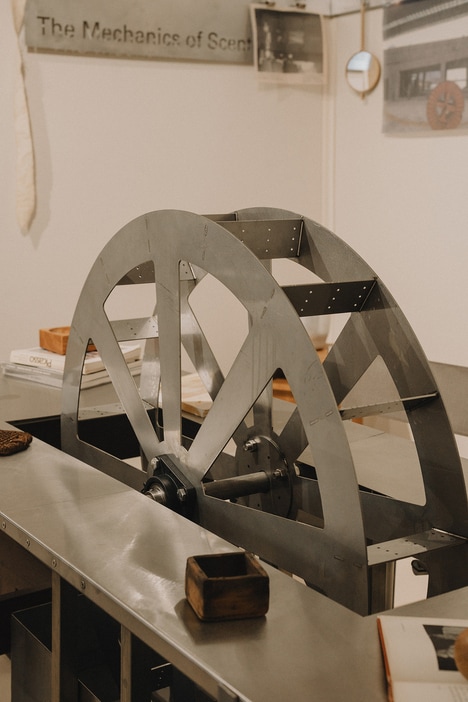

DSM-Firmenich created Anankè as a fragrance installation for Paris Design Week in the garden at Maison de Victor Hugo. The piece centers on a fragmented menhir that releases aromatic smoke, turning the stone into a sculptural incense burner.
The scent layers pyrogenic frankincense with juniper, while chili essence adds a sharp, metallic lift. Three fractured spheres nearby each hold a different fragrance and point the work in another direction: Éternelle Écume uses tomato leaf, cucumber, and algae; Idéale Ivresse pairs yuzu with Pamplewood; and Miette Infinie mixes maple syrup and soy sauce.
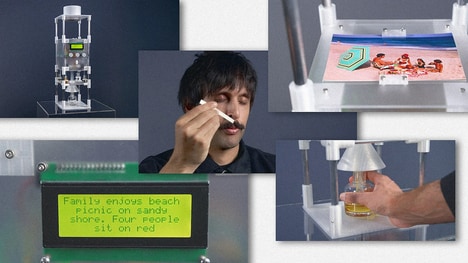
Anankè makes fragrance feel spatial instead of purely decorative. That matters because the installation treats scent as a material that can stand beside stone, paper, and light. It also gives visitors a more tactile way to experience design, with the fragrances later reworked into drinks and personalized pastries at Papapa café.
Image Credit: DSM-Firmenich
Key Themes Behind This Trend
- Spatial Scent Design
- Fragrance is moving beyond wearables and décor into architectural environments, creating opportunities for brands to shape mood, memory, and navigation through immersive sensory materials.
- Smoke-based Experiences
- Aromatic smoke introduces ritual, motion, and atmosphere into installations, opening new possibilities for multisensory spaces that blend sculpture, performance, and ambient storytelling.
- Flavor-fragrance Crossovers
- The translation of scents into drinks and pastries highlights a growing convergence between perfumery and gastronomy, where sensory identities can extend across physical, edible, and experiential formats.
Where This Applies
- Fragrance and Perfumery
- Perfumery is expanding into spatial and experiential formats, giving ingredient houses and scent brands new relevance in culture, design, hospitality, and branded environments.
- Experiential Design
- Immersive installations that treat scent as a core material signal fresh potential for museums, retail spaces, and cultural venues to differentiate through non-visual engagement.
- Food and Beverage
- Cafés, restaurants, and beverage brands can reinterpret fragrance compositions as edible experiences, creating distinct sensory menus that connect taste with art and design.