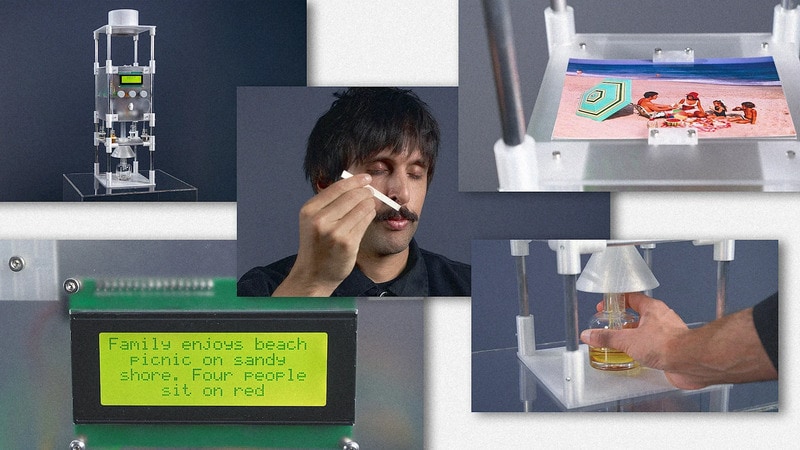
The Anemoia Device is a physical system introduced by Fast Company and Inc. that converts images into scent profiles, featuring generative AI trained to map visual cues to aromatic elements. It translated colors, textures and contextual objects in a photograph into a blend of fragrance notes designed to evoke associated memories.
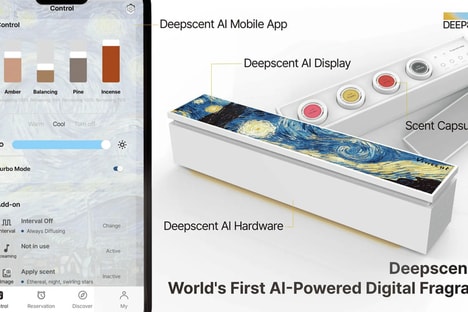
The device pairs software models with an aroma-dispensing mechanism and a library of scent ingredients, allowing on-demand synthesis of complex olfactory combinations. It was presented as a prototype that blends machine learning, perfumery data and hardware to produce reproducible scents from visual inputs.
For consumers the system promises new ways to archive and share memories through smell, expanding sensory content beyond audio and video and highlighting a broader trend toward multisensory digital experiences.
Image Credit: Cyrus Clarke / MIT Media Lab
Key Themes Behind This Trend
- Multisensory Content Experiences
- The integration of scent with visual and auditory media creates new forms of immersive storytelling that can deepen emotional engagement and memory encoding.
- Generative Olfactory AI
- AI models that predict and synthesize complex fragrance profiles from non-olfactory inputs enable automated creation of personalized and context-aware scents at scale.
- Image-to-scent Translation
- Mapping colors, textures and objects in images to aromatic notes opens possibilities for translating visual data into a persistent, shareable olfactory layer for digital content.
Where This Applies
- Advertising and Marketing
- Branded campaigns could be augmented with tailored scent experiences that change consumer perception and recall of products and messages.
- Consumer Electronics
- Home devices and peripherals embedding scent-dispensing hardware may redefine multimedia platforms by adding an olfactory output channel to phones, TVs and AR headsets.
- Wellness and Memory Care
- Scent-based reconstructions of personal imagery could provide therapeutic tools for memory stimulation and emotional wellbeing in aging and clinical populations.