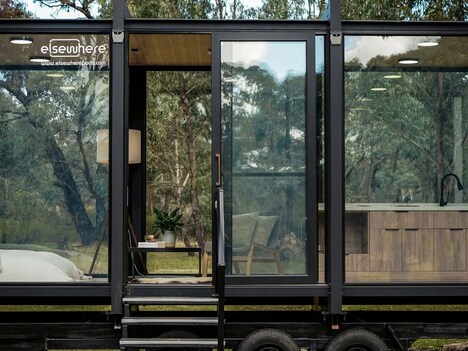
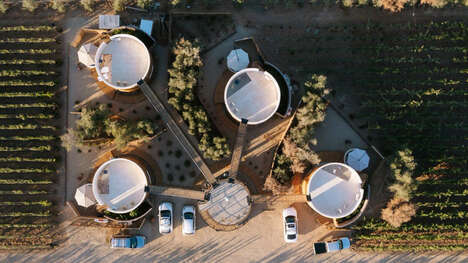
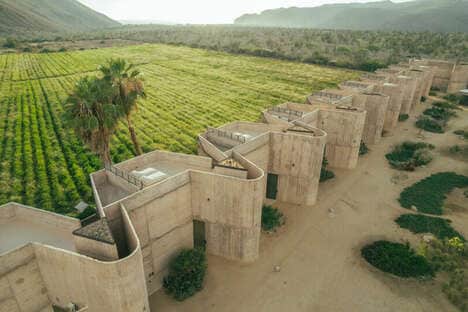
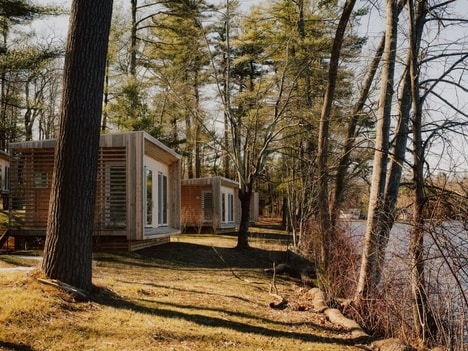
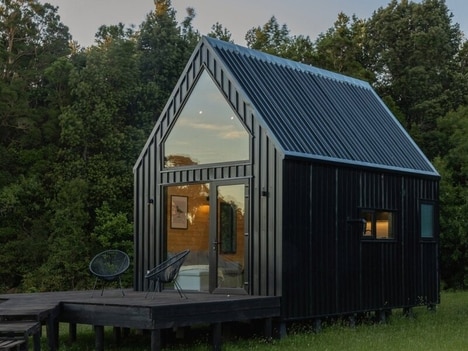
Just outside of Uruguay's Punta del Este, the Sacramonte Landscape hotel by Brazil-based MAPA Architects features 13 luxurious cabins. Each part of this modern hotel was made and assembled on-site to create minimal disruption to the surrounding natural terrain of grasslands, spring-water reservoirs and Merlot and Cabernet Sauvignon grapes.
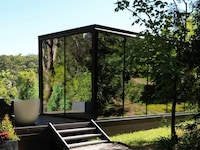
The front of each cabin is covered in smoky one-way mirror glass, creating a simple yet effective camouflage to the setting, while providing a vast view from the interior. The cool dark color scheme paired with oak wall panels in each room creates a contrast for the unobstructed views of the Sierra.
At the center of the Sacramonte Landscape hotel sits a farm-to-table restaurant that serves meals as luxurious at the rest of the amenities.
Key Themes Behind This Trend
- Mirrored Glass Facade
- Potential for innovative architectural designs utilizing mirrored glass facades to create seamless integration with natural surroundings.
- Farm-to-table Dining
- Opportunity for hotels and restaurants to prioritize locally sourced, sustainable ingredients and offer farm-to-table dining experiences.
- Minimal Disruption Construction
- Potential for construction companies to adopt on-site manufacturing and assembly techniques to minimize disruption to natural environments.
Where This Applies
- Architecture & Design
- Architecture firms can explore the use of mirrored glass facades to create visually stunning and environmentally integrated structures.
- Hospitality
- Hotels and resorts can incorporate farm-to-table dining experiences to attract eco-conscious travelers and enhance the overall guest experience.
- Construction
- Construction companies can adopt on-site manufacturing and assembly methods to minimize ecological impact and promote sustainable construction practices.