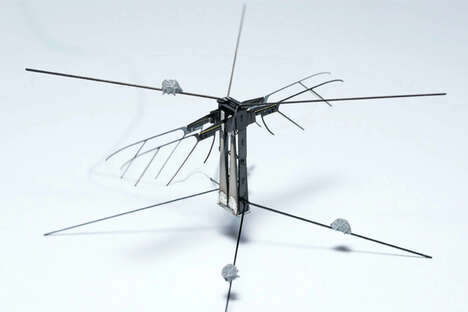
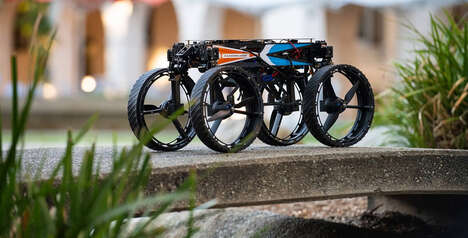
Airplane engine repair can be cramped and tedious work but Rolls-Royce is aiming to make these repairs easier with the use of tiny Rolls-Royce robots. While these miniature robots are still under development, the British automobile company is confident that these robots will lead to faster and less labor intensive engine inspections. These robots were first displayed at the 2018 Farnborough Airshow, and are being developed in a partnership with the University of Nottingham and Harvard University.
These tiny Rolls-Royce robots were inspired by cockroaches and will be armed with small cameras to provide workers a look inside. The use of these Rolls-Royce robots would mean repairs could be completed without removing the engine from the plane and having human technicians work on the piece of the plane.
Image Credit: Rolls-Royce
Key Themes Behind This Trend
- Airplane Engine-repair Robots
- The development of tiny robots for airplane engine repair could revolutionize the aviation industry by making repairs faster and less labor-intensive.
- Miniature Inspection Robots
- The use of miniature inspection robots can provide workers with a look inside an engine, and ultimately lead to more accurate and efficient repairs.
- Biologically-inspired Robotics
- Developing robots based on biological creatures such as cockroaches can lead to innovative solutions for challenging environments, like airplane engines, that are difficult for humans to access.
Where This Applies
- Aviation
- The aviation industry could benefit greatly from the use of miniature robots for airplane engine repair, which can help reduce maintenance time and improve safety.
- Robotics
- The development of these miniature Rolls-Royce robots demonstrate the potential for robotics to revolutionize the manufacturing and maintenance processes across a range of industries.
- Manufacturing
- The use of tiny robots for airplane engine repair highlights the potential for robotics to enhance precision and efficiency in the manufacturing process by providing workers with a better understanding of difficult to access components.