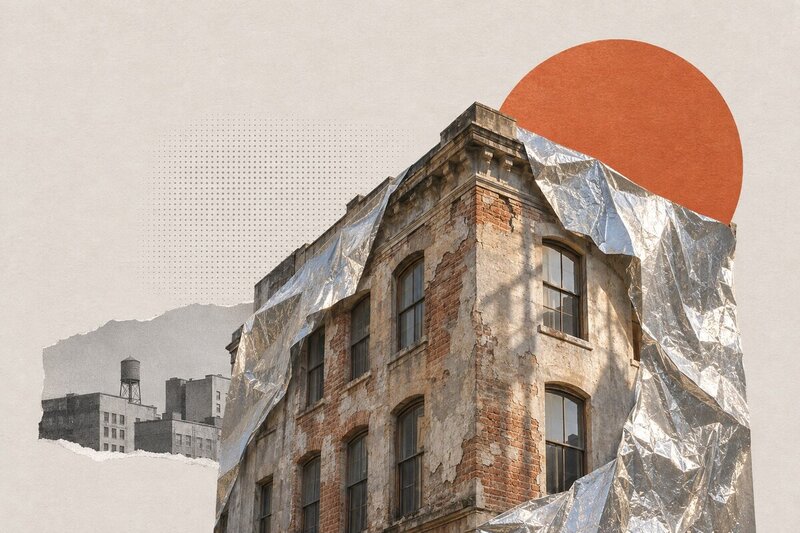
Vhils and Marcelo Cidade turned a historic São Paulo building into a reflective facade installation by covering it with silver thermal sheets. The project, titled 2878, gives the old structure a metallic skin while keeping its original architectural features visible beneath the surface.
The artists applied the sheets with a cornstarch-based adhesive, letting the covering follow the building’s contours and open details. As sunlight shifts, the facade alternates between glowing and breaking up the street around it, which makes the address stand out without changing the structure itself.
At Rua Cardeal Arcoverde 2878, the work turns an overlooked building into a temporary landmark. Using inexpensive materials on an existing facade makes the intervention easy to read from the street and points to a lower-cost way of framing urban memory.
Why This Trend Is Growing
- Reflective Urban Skins
- Temporary metallic coverings on existing buildings create high-impact visual landmarks while preserving underlying architectural character.
- Low-cost Facade Art
- Inexpensive materials and simple adhesives make large-scale public installations more accessible for cities, brands, and cultural districts.
- Memory-based Placemaking
- Historic structures gain renewed visibility when artistic interventions highlight, rather than erase, traces of the built environment.
Industries Being Reshaped
- Public Art
- Reflective facade projects expand the role of street-facing installations as immersive, site-specific cultural experiences.
- Architecture
- Noninvasive building wraps suggest new possibilities for adaptive expression without permanent structural renovation.
- Urban Development
- Temporary visual upgrades can reposition overlooked properties as neighborhood focal points and stimulate renewed public interest.