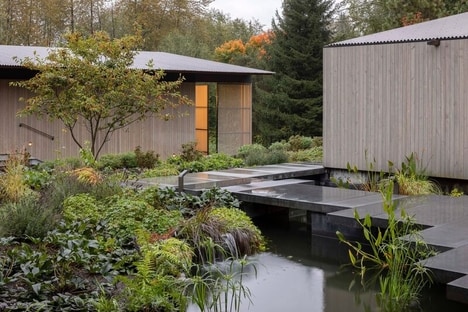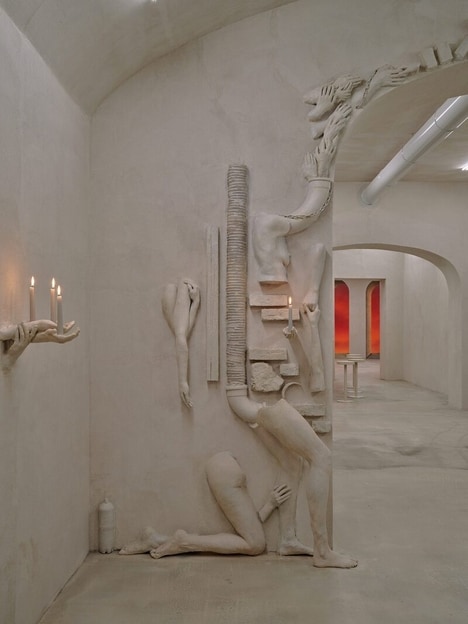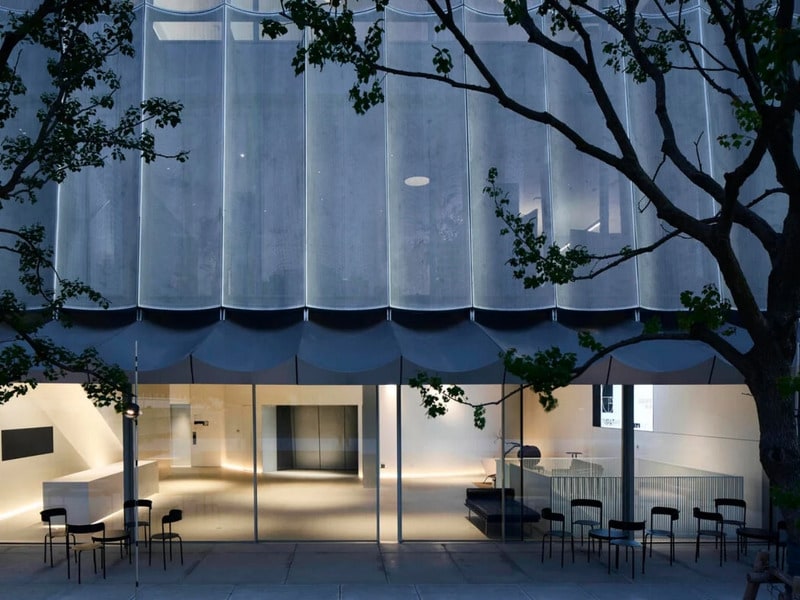
The Hangzhou Empathy Museum is a contemporary art venue completed in 2025 in Hangzhou’s Xiaoshan District, designed by architecture studio TAOA from an unfinished and abandoned structure. The project repurposes the existing shell into a compact cultural facility of around 1,628 square meters, with 570 square meters above ground and two basement levels dedicated to exhibition space. The building’s façade is clad in wave-like stainless steel and anodized aluminum panels that produce shifting reflections as natural light moves throughout the day, giving the exterior a dynamic presence.
Above ground, the museum accommodates reception areas, gathering spaces, and a third-floor lounge platform, while the central circulation includes a vertical void that brings natural light into the lower galleries. TAOA’s approach maintains a restrained material palette that includes stainless steel, aluminum mesh, stone, and rock panels to ensure visual continuity between interior and exterior surfaces.
Image Credit: TAOA
What's Driving This Trend
- Adaptive Reuse of Unfinished Structures
- Repurposing abandoned shells into cultural venues demonstrates potential for scalable low‑carbon urban renewal models that shift investment away from ground-up construction.
- Dynamic Reflective Facades
- Shifting stainless-steel and anodized-aluminum exteriors reveal opportunities for façades that combine branded visual identity with passive light modulation and changing environmental responses.
- Light-driven Subterranean Design
- Vertical voids and daylight strategies point toward immersive below-grade exhibition typologies that minimize artificial lighting and redefine visitor circulation hierarchies.
Who This Affects Most
- Architecture and Design Firms
- Contemporary practices with expertise in restrained material palettes and adaptive workflows can create new service lines focused on efficient museum conversions that challenge conventional preservation cost structures.
- Advanced Materials Manufacturing
- The prominence of wave-like metal cladding indicates rising demand for customizable reflective panels and coated alloys that merge formability, durability, and aesthetic variability.
- Cultural Real Estate Development
- Converting abandoned buildings into compact cultural facilities suggests an emergent asset class combining community programming, tourism draw, and alternative revenue models for underutilized properties.