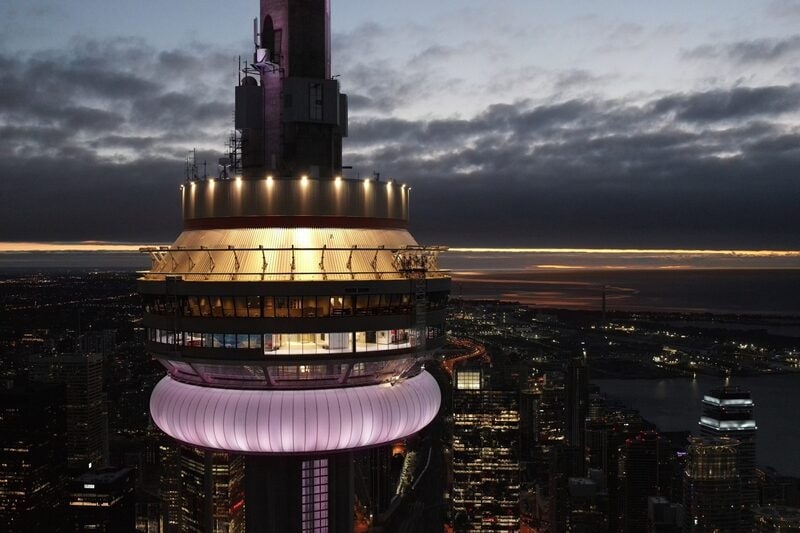
The CN Tower renovation reimagines the Lower Observation Level at Toronto’s landmark structure with a comprehensive update to interior and exterior visitor spaces as part of its 50th anniversary year. The project led by Superkül alongside design-build team Boszko & Verity replaces the original vertical glazing and outdoor steel enclosure with new sloped structural glass and “Tilt Zones,” which allow visitors to lean outward for expansive views of the city skyline. The renovation also expands usable interior area and introduces a revitalised outdoor terrace, modernising the tower’s visitor experience more than four decades after its original opening in 1976.
A biophilic, modular ceiling system comprises digitally fabricated oak-laminated panels that conceal mechanical and audiovisual components, while interactive displays such as a large immersive video wall and panoramic screens showcase Canadian and Indigenous art. Accessibility improvements developed with specialists extend inclusive access across the renovated level. The CN Tower’s Lower Observation Level now features year-round indoor viewing capacity and upgraded viewing zones that combine panoramic glazing with integrated interactive and cultural elements to enhance visitor engagement.
Image Credit: Doublespace Photography
Key Themes Behind This Trend
- Interactive Experience Integration
- Spaces like the CN Tower are transforming with interactive displays that incorporate cultural narratives, allowing for deeper visitor engagement.
- Biophilic Design in Urban Landmarks
- Urban structures are increasingly adopting biophilic design elements to enhance aesthetic appeal and promote well-being within bustling city environments.
- Accessibility Innovations in Tourism
- Developments in accessibility design are enabling landmark attractions to offer inclusive experiences, catering to diverse visitor needs.
Where This Applies
- Tourism and Hospitality
- As cultural and interactive elements are integrated into tourist attractions, the tourism industry is evolving to create richer, more immersive visitor experiences.
- Architecture and Design
- The incorporation of modern design techniques such as modular and biophilic elements is leading a transformative wave in architectural practices for public spaces.
- Engineering and Construction
- Innovations in structural materials and construction methods are redefining how iconic structures are being modernized and expanded.