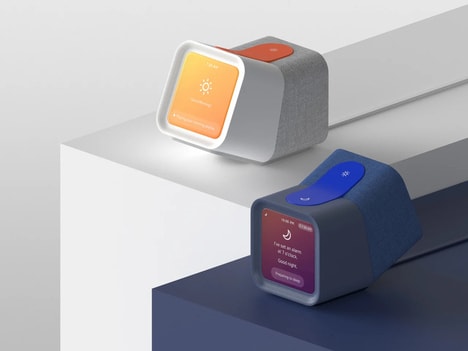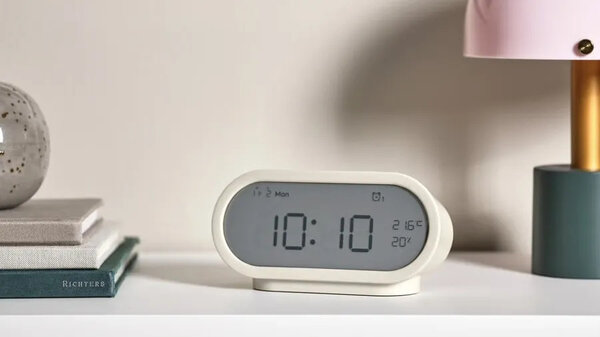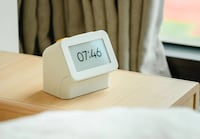

KAIROS turns the snooze button into a morning puzzle, forcing a finger-drawn pattern on the screen before the alarm stops. The concept comes from Cheon Ryong Choi and is built for people who keep reaching for the same easy tap, then losing extra minutes of sleep.
Each morning the display shows a new pattern, so there is no fixed spot to hit in half-asleep mode. The clock also shows the time and a quick weather readout after the alarm goes quiet, which keeps the phone on the bedside table instead of in your hand.
That screen-based reset makes waking up more deliberate and gives the alarm a role beyond sound alone. In a market full of app tricks and phone-based wake-up tasks, KAIROS moves the challenge onto the clock itself and keeps the morning routine closer to the nightstand.
Image Credit: AI-generated
Key Themes Behind This Trend
- Cognitive Wake-up Interfaces
- Alarm products that require pattern recognition or simple problem solving create openings for habit-forming devices that blend behavioral science with everyday routines.
- Phone-free Morning Tech
- Bedside hardware that delivers time, weather, and wake-up utility without encouraging smartphone use reflects rising demand for calmer, less distracting starts to the day.
- Anti-snooze Design
- Products built to interrupt automatic tapping and half-asleep repetition signal potential for wellness tools that reduce passive habits through intentional interaction.
Where This Applies
- Consumer Electronics
- Dedicated smart alarm devices can differentiate through tactile, screen-based, and cognitive features that move beyond basic sound alerts.
- Sleep Technology
- Wakefulness-focused design expands the sleep category into morning behavior management, connecting rest quality with more controlled wake-up rituals.
- Digital Wellness
- Nightstand-first solutions support healthier boundaries with smartphones by replacing app-based routines with purpose-built, low-distraction experiences.
Featured Reports

Why Fragrance Is Finding Its Way Into Everything
Verified Economy