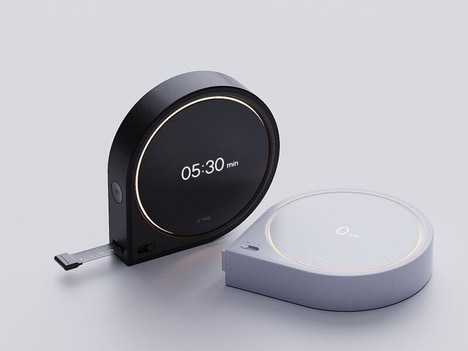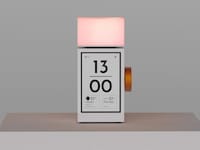
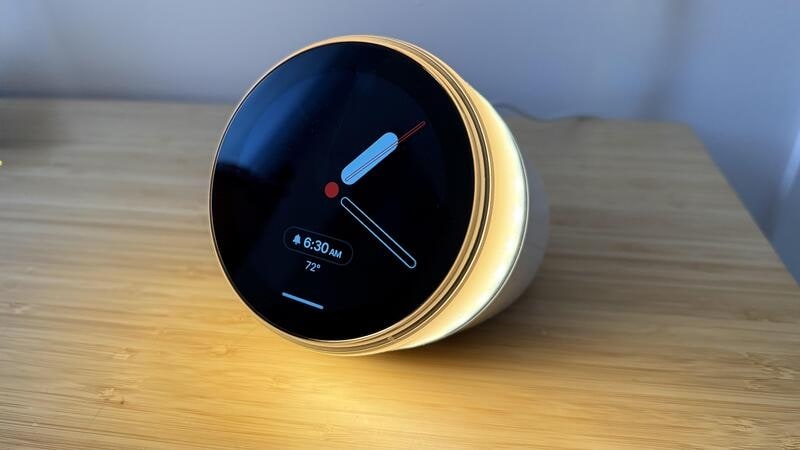
Ambient introduced the Dreamie, a $250 smart alarm clock designed to pull users away from phones and toward better sleep, featuring a circular touchscreen and on-device controls. The product launched with an emphasis on no-app setup, built-in temperature and humidity sensors, and a 50-mm speaker for 360-degree audio.
The device included four built-in alarm sounds and gesture-based interactions for volume, brightness, and light direction. Dreamie’s design mixes analog and digital display options and offers swipe gestures to begin wind-downs or access settings, aiming for intuitive bedside use without subscription ties.
For consumers, Dreamie matters because it removes phone dependency while delivering a stylish bedside hub for light-and-sound wake routines; pending firmware updates promise brighter directed light and a light-disable option, which will broaden its appeal to light-sensitive sleepers.
Image Credit: Dreamie
What Makes This Trend Stand Out
- Phone-free Bedside Hubs
- Rising preference for standalone bedside devices that replace smartphones as sleep and wake controllers creates room for integrated hardware-software ecosystems centered on privacy and simplicity.
- Gesture-based Sleep Controls
- Non-touch and touch-adjacent interactions for brightness, volume, and routines enable intuitive, low-friction interfaces tailored to nocturnal use cases.
- Ambient Sleep Sensing
- On-device temperature and humidity sensing combined with audio and light control supports context-aware sleep environments that adapt to room conditions without cloud dependency.
Sectors Adopting This
- Consumer Electronics
- Compact, design-forward alarm clocks with onboard controls present opportunities for premium hardware that competes on aesthetics, tactile UX, and local processing rather than app ecosystems.
- Sleep Technology
- Devices that blend multisensor inputs and sound/light therapies can expand clinical and consumer offerings for personalized sleep improvement and monitoring.
- Hospitality and Wellness
- Hotels and wellness facilities can offer integrated bedside hubs that enhance guest sleep experiences through tailored lighting, soundscapes, and minimal-phone check-in options.