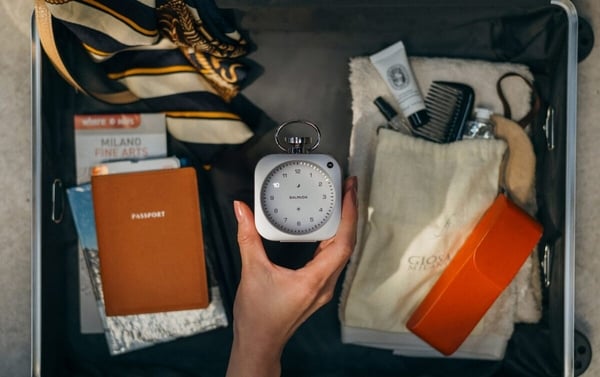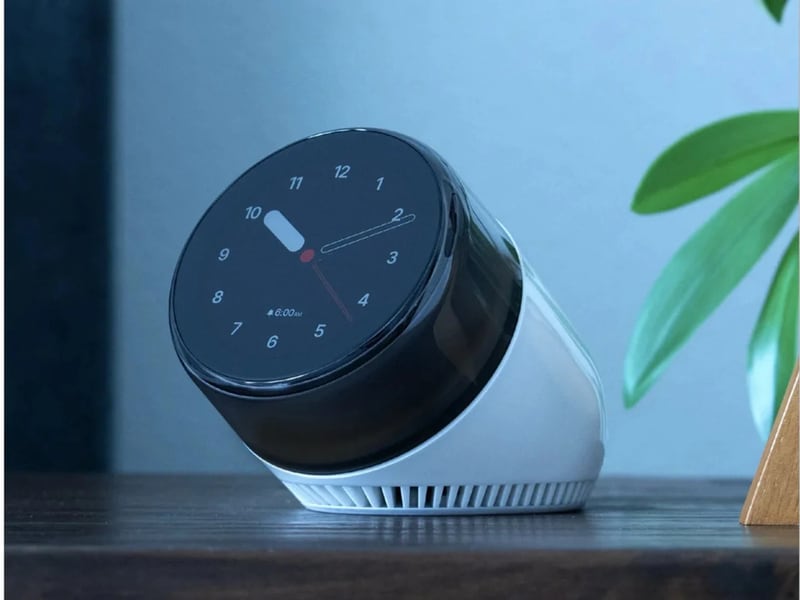
The Dreamie is a bedside sleep assistant developed by Boston-based company Ambient as a dedicated alternative to keeping a smartphone on the nightstand. The compact device combines several nighttime functions into one unit, including alarms, soundscapes, ambient lighting, and a built-in podcast player. A circular touchscreen sits within a rounded pill-shaped body, while tactile controls such as a hidden dial for volume and a touch strip for light adjustment allow users to operate the device without relying on a phone.
The device is designed to reduce digital distraction in the bedroom. The display can dim to near-black with a redshift mode to minimize blue light, and the system avoids notifications, social feeds, and apps. Dreamie includes a 50-millimeter speaker with a 360-degree grille for ambient sound diffusion along with built-in noise masks and environmental soundscapes. Priced at about $249.99, the device operates without subscriptions or user accounts, with software updates delivered directly through the device.
Image Credit: Ambient
What's Driving This Trend
- Phone-free Bedrooms
- Devices designed to replace smartphones at night create opportunities for dedicated bedside hardware that minimizes notifications and digital temptation while centralizing sleep-related functions.
- Ambient Sleep Technology
- A focus on engineered soundscapes, redshift lighting, and noise-masking speakers points to novel product designs that prioritize physiological sleep cues over screen-based media.
- Tactile Minimalist Interfaces
- Physical controls like hidden dials and touch strips combined with minimal displays indicate potential for interfaces that enable low-cognitive interaction in low-light environments.
Who This Affects Most
- Consumer Sleep Electronics
- The consumer electronics market can be disrupted by standalone sleep assistants that bundle alarms, audio, and lighting into privacy-forward, subscription-free devices.
- Smart Home Ecosystems
- Integration of bedside privacy devices with broader smart-home systems could reshape bedroom automation around calm, do-not-disturb zoning and localized ambient control.
- Wellness Hospitality
- Hotels and short-stay accommodations may adopt dedicated sleep companion devices as part of sleep-centric room design to enhance guest rest without introducing personal-device distractions.