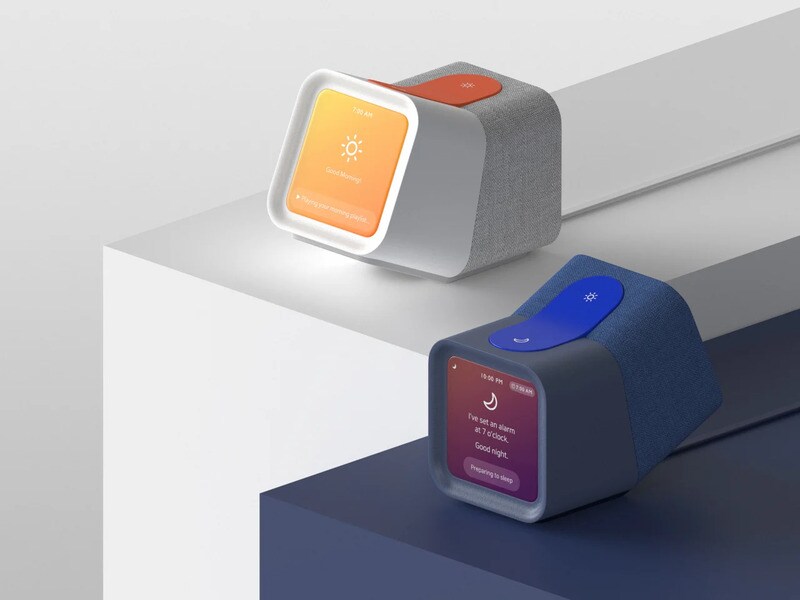
The Tilt smart clock is a bedside device shaped as a small fabric-wrapped wedge with a front display angled for easy viewing. The clock responds to being tilted in either direction to switch between preset modes. In one position, it activates a daytime scene with brighter lights, normal phone notifications, and standard alarm settings. Tilting it the opposite way initiates a night routine that can lower lighting, mute notifications and set a wake time for the next morning. The physical gesture replaces app menus and gives a clear visual cue of which mode is active.
The internal components include sensors that detect orientation and trigger the corresponding routine. The display remains simplified so the clock reads clearly in low light. The compact form allows it to sit on a nightstand without taking over the space. The design focuses on reducing friction at bedtime by making the shift between day and night settings a single motion.
Image Credit: Hojung Cha
Key Themes Behind This Trend
- Gesture-controlled Devices
- Gesture recognition technology embedded in consumer electronics fosters a more intuitive and seamless user interaction by replacing touch and voice commands.
- Dynamic Routine Automation
- Products that automatically adapt to user routines based on simple physical movements offer enhanced personalization and convenience in daily life.
- Minimalist Smart Home Interfaces
- Simplified and visually clear interfaces in smart home devices reduce cognitive load, allowing effortless interaction in diverse lighting conditions.
Where This Applies
- Consumer Electronics
- Emerging opportunities exist in creating devices that blend form and function with gesture-responsive features to offer a unique user experience.
- Home Automation
- Integrating gesture-based controls in home automation systems opens up new possibilities for non-intrusive, adaptive living environments.
- Sleep Technology
- Innovations in sleep tech focusing on effortless transitions between day and night routines can enhance rest and productivity by optimizing bedroom environments.