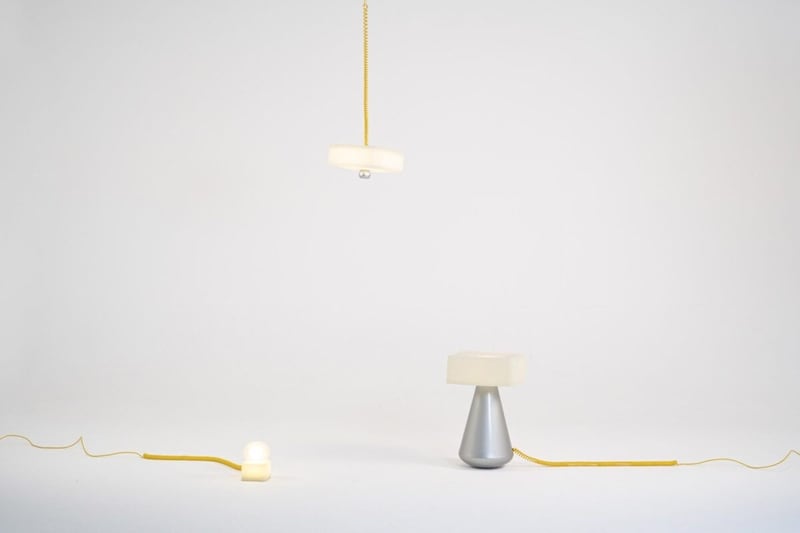
The Call It a Day collection is comprised of a family of table, floor, and pendant lamps by Tongqi Design that replace conventional switches with intuitive physical interactions. Each light features a translucent silicone shade that responds to simple gestures such as pressing, pulling, or tapping to activate or deactivate illumination. The soft, flexible material encourages tactile engagement while creating a diffused glow that complements the collection's understated appearance and everyday functionality.
The collection uses deformable silicone shades that stretch and return to their original form after interaction, reinforcing the lamps' responsive design. Table, floor, and pendant versions share the same material palette and interaction method to create a consistent user experience across different interior settings. The simplified control system removes visible switches from the design.
Image Credit: Tongqi Design
What's Driving This Trend
- Gesture-based Interfaces
- Intuitive physical controls are shifting everyday products away from buttons and screens toward more natural interactions embedded directly into materials.
- Tactile Smart Home Design
- Soft-touch surfaces create new potential for connected interiors that feel warmer, more accessible, and less visibly technological.
- Switchless Product Aesthetics
- Minimal hardware integration opens space for lighting and furnishings that merge control, form, and function into seamless domestic objects.
Who This Affects Most
- Lighting
- Responsive materials are expanding decorative lighting beyond illumination into interactive objects that differentiate premium residential and hospitality environments.
- Interior Design
- Material-led interaction introduces opportunities for spaces where furniture, fixtures, and ambiance controls share a unified sensory language.
- Consumer Electronics
- Embedded gesture controls suggest a quieter category of home technology where usability is concealed within familiar physical forms.