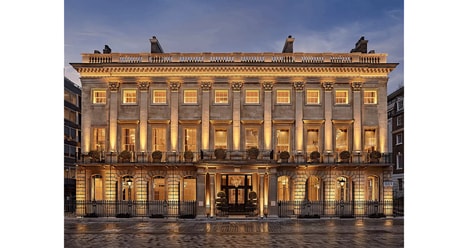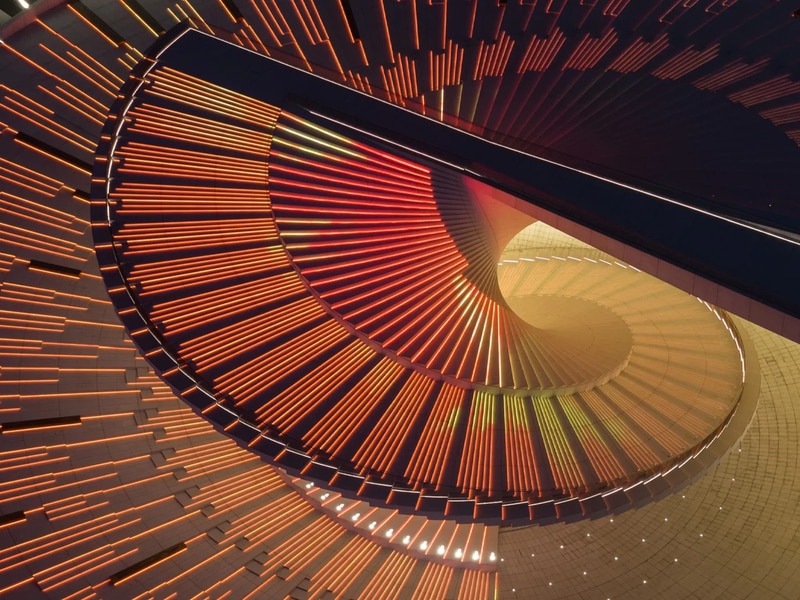
The Shanghai Grand Opera House is a performing arts venue designed by Snøhetta in collaboration with East China Architectural Design & Research Institute, Theatre Projects and Nagata Acoustics. Completed in June 2026, the building occupies Shanghai's Houtan district with a helical roof inspired by the movement of an opening fan. A spiralling public walkway leads to a rooftop observation deck that remains accessible throughout the year, extending the cultural destination beyond scheduled performances while connecting visitors with views of the Huangpu River and surrounding skyline.
The opera house contains three performance spaces, including a 2,000-seat main auditorium, a 1,200-seat secondary hall and a 1,000-seat flexible theatre for adaptable productions. Nagata Acoustics developed the venues to support large-scale opera alongside experimental performances. The interior combines oak flooring, dark-stained wood finishes and expansive glazed façades that introduce natural light into the public areas.
Image Credit: Snøhetta
What Makes This Trend Stand Out
- Year-round Cultural Access
- Publicly accessible rooftop paths and observation decks expand cultural venues into everyday civic destinations with new models for foot traffic, retail integration, and community engagement.
- Flexible Performance Spaces
- Adaptable theatres supporting both grand opera and experimental productions signal demand for venues that can monetize diverse programming formats and emerging creative technologies.
- Landmark Riverfront Design
- Iconic helical architecture along waterfront districts elevates performing arts buildings into skyline assets that blend tourism, placemaking, and premium urban development value.
Sectors Adopting This
- Performing Arts
- Multi-hall opera houses with advanced acoustics broaden the traditional stage economy by accommodating immersive, experimental, and large-scale productions within one venue.
- Architecture and Design
- Sculptural public buildings that merge circulation, observation, and performance space create differentiation for firms developing hybrid cultural and civic infrastructure.
- Urban Tourism
- Cultural destinations with all-season public access and panoramic city views strengthen visitor economies beyond event schedules through continuous experiential draw.