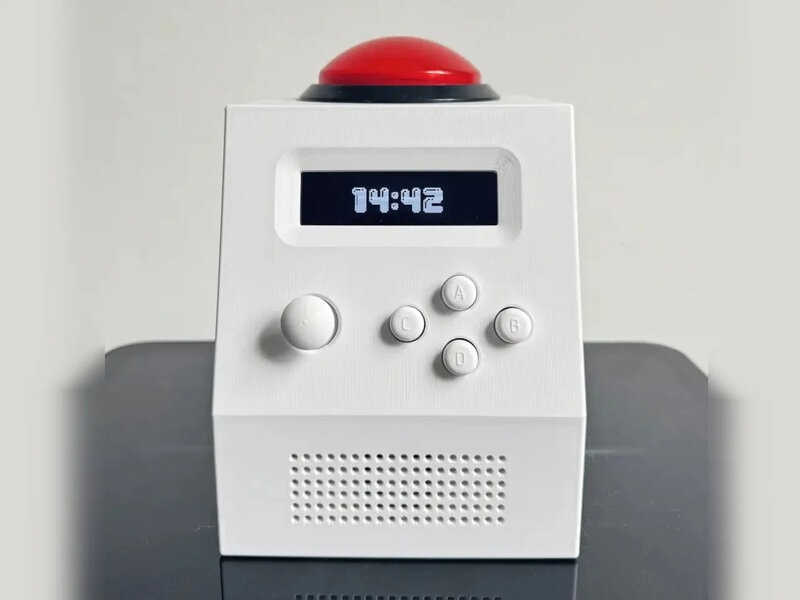
CinderClock is a standalone desktop clock designed to replace the functions people typically hand over to a phone. It runs without an app, cloud connection, or subscription, with WiFi disabled at startup unless deliberately enabled for firmware updates. Ten alarm-history entries, a countdown timer, four-lap stopwatch, two Pomodoro presets, and continuous temperature and humidity monitoring keep those functions on the device. Sunrise and sunset times are also available for schedules tied to natural light.
Designed by Aqnazar Arysbek, the clock uses a raked face for legibility from different heights, while four keys and a joystick handle navigation. Its 3D-printed enclosure incorporates the speaker grille, and the processor sleeps between seconds toward a two-week battery target. Repairability is built into the design through published bill of materials, PCB files, enclosure models, and open-source firmware released under an Apache 2.0 license. Common components and labeled module positions are intended to make sourcing and servicing possible long after the original device is sold.
Image Credit: Aqnazar Arysbek
Why This Trend Is Growing
- Phone-free Routines
- Standalone bedside devices signal a growing market for digital-minimalist tools that preserve utility while reducing smartphone dependency in daily rituals.
- Open-source Hardware
- Published firmware, PCB files, and enclosure models create room for longer-lasting consumer electronics ecosystems built around repairability and community-led iteration.
- Offline Smart Devices
- Privacy-conscious connected products are emerging through hardware that keeps core functions local while limiting cloud access to optional maintenance tasks.
Industries Being Reshaped
- Consumer Electronics
- Compact multifunction devices can reshape expectations for everyday gadgets by combining practical features with repairable, low-connectivity designs.
- Sleep and Wellness
- Bedside products that remove phone distractions offer new pathways for supporting rest routines, focus habits, and healthier relationships with screens.
- Maker Manufacturing
- 3D-printed enclosures, common components, and open design files expand the potential for small-batch hardware production and distributed servicing models.