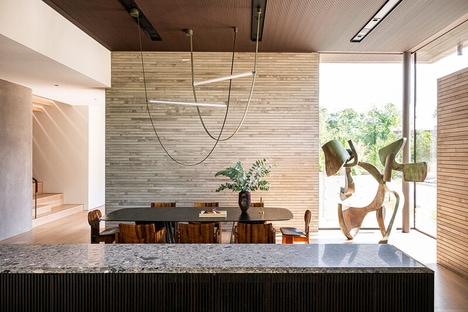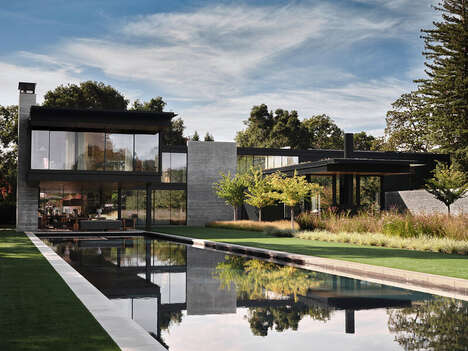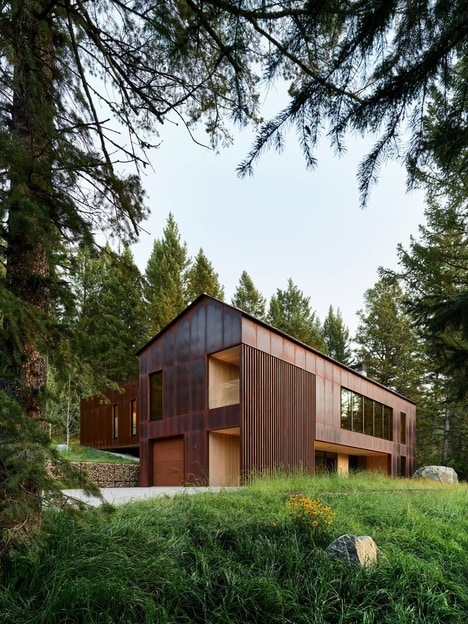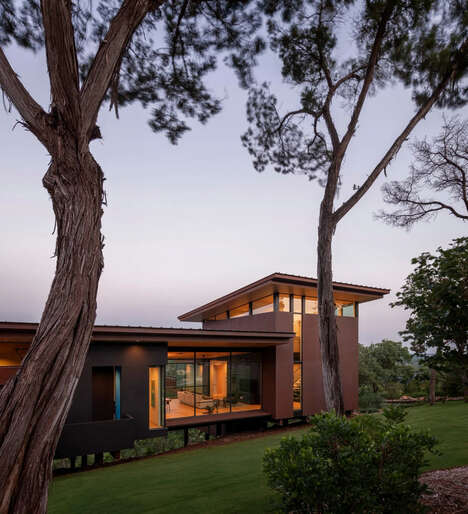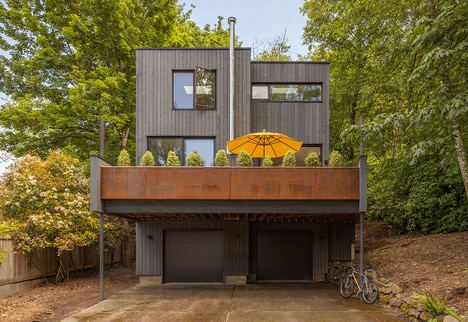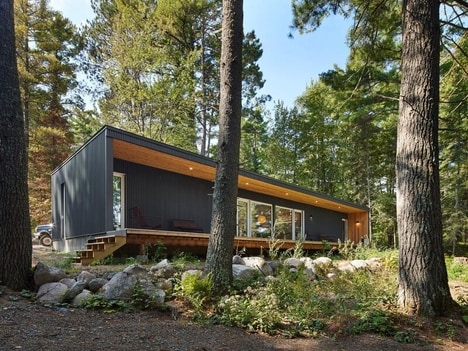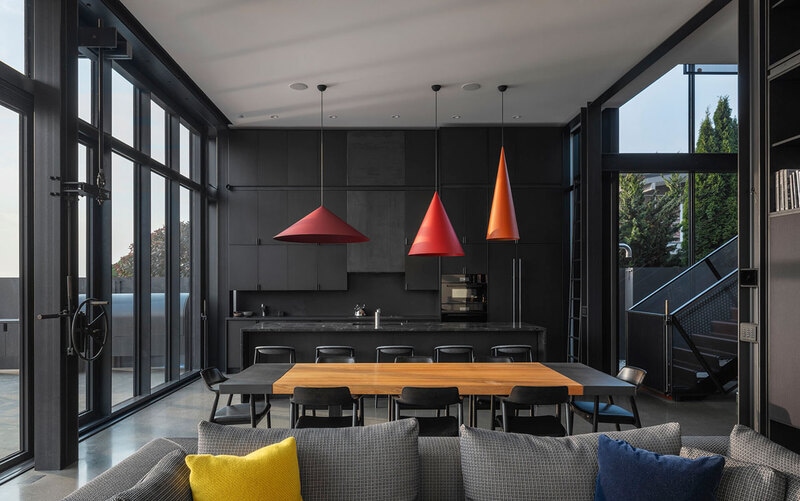
The Pattern House by Olson Kundig offers a quiet but expressive retreat on a tight site overlooking Lake Washington. The design is split into two volumes: a garage-workshop in concrete and the main residence clad in Kebony wood. A Mini Cooper blue front door leads into a soaring entry that opens to lake views, while pivot doors and sliding panels erase boundaries between indoors and out. The landscaping includes native plants, a sloped lawn, and a built-in outdoor kitchen, all oriented to the water. “It feels like the house is part of the environment,” says the client, reflecting the team’s goal to blend form with function.
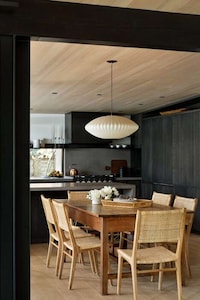
Inside, a sculptural steel staircase with integrated leather details acts as a visual anchor. Textures include recycled oak floors, dark stone slabs, and playful red accents that honor the family’s industrial roots. Moody, durable, and warm, the house balances hard-edged materials with personal touches throughout.
Image Credit: Olson Kundig
What's Driving This Trend
- Sustainable Architectural Design
- Efforts to seamlessly integrate architecture with the natural landscape emphasize the growing trend of sustainable design that meets aesthetic and environmental goals.
- Industrial Aesthetic Revival
- The use of industrial materials like concrete and steel alongside contemporary design elements signals a resurgence of the industrial aesthetic within residential architecture.
- Indoor-outdoor Living Blends
- Innovative architectural features such as pivot doors and sliding panels that dissolve the boundaries between indoor and outdoor spaces highlight a shift towards more fluid, adaptable living environments.
Who This Affects Most
- Eco-friendly Construction
- Growing demand for materials like Kebony wood suggests opportunities within the eco-friendly construction industry to innovate green building supplies that meld durability with sustainability.
- Luxury Real Estate
- The incorporation of design elements that offer both luxury and a bespoke sense of place reflects a transformative shift in the luxury real estate market towards personalized, experience-driven properties.
- Landscape Architecture
- The strategic use of native plants and tailored outdoor spaces reflects evolving practices in landscape architecture focused on ecological harmony and site-specific design.