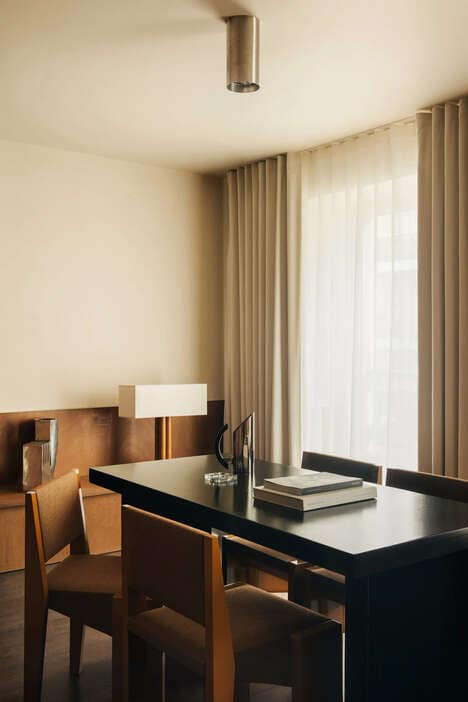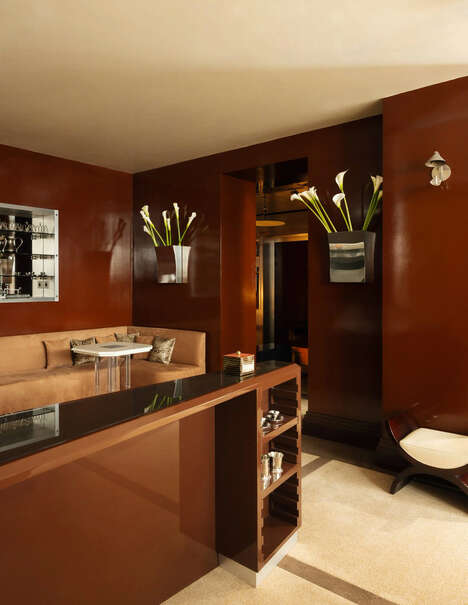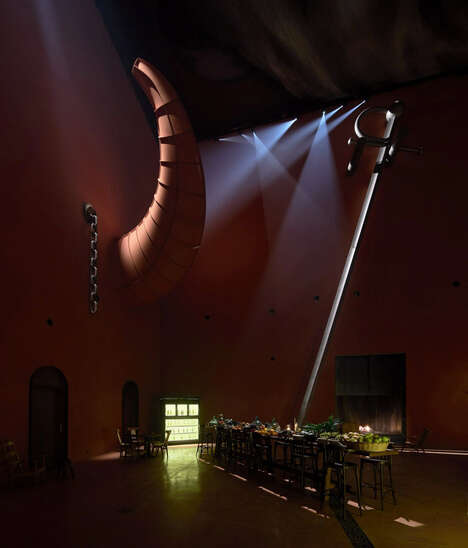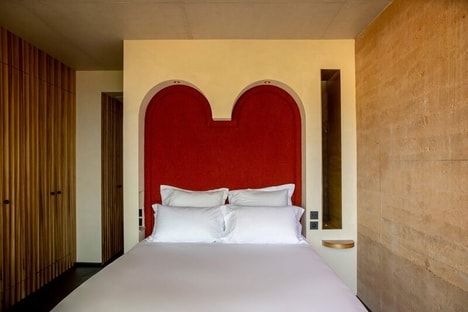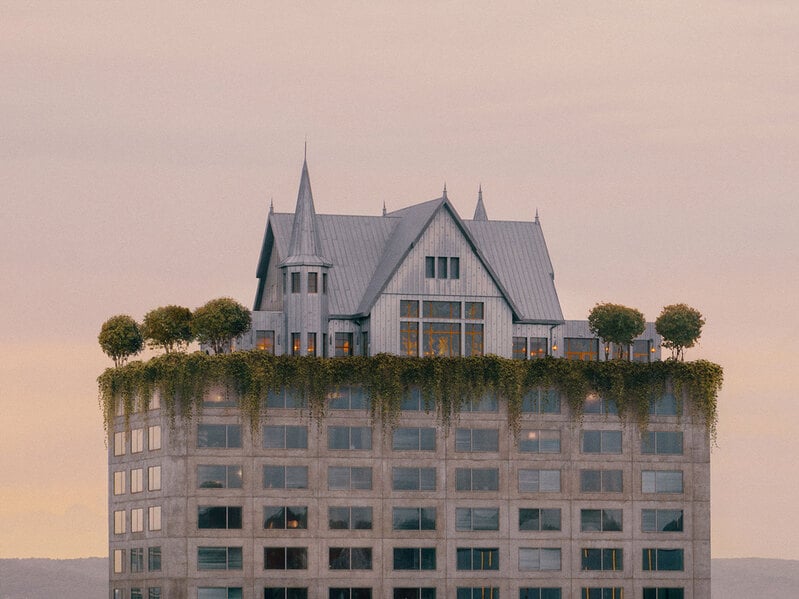
Philippe Starck designed the Maison Heler hotel, which is designed with a whimsical aesthetic. It is inspired by a fictional story and serves as the main influence throughout. It celebrates La vie minutieuse de Manfred Heler, which is a novel by the designer himself. This was the main source of inspiration as the biography is loosely based on his own life experiences. It follows the tale of an orphan with limited resources and starts to reinvent his life.
Starck explains the narrative, “He doesn’t necessarily succeed in everything he undertakes, but it’s always done with intelligence and poetry, guided by a naive desire to create meticulously at all costs. One day, Manfred is in his park (near his home). It’s springtime. He’s daydreaming in his armchair. Suddenly, the earth begins to tremble. He doesn’t understand what’s happening. He looks around and realizes, to his aghast, that he’s going up in the air, along with his park, his house and his armchair. He climbs and climbs and climbs, until the shaking stops. Then there’s silence. Manfred is high above the city. His house has been extruded: as if a cookie-cutter had arrived from below, cut off the earth’s cap and mounted it vertically.”
Image Credit: Philippe Starck
What Makes This Trend Stand Out
- Narrative-driven Hotel Design
- Integrating fictional stories into hotel designs provides unique, immersive experiences for guests, offering a profound differentiation in the hospitality industry.
- Whimsical Aesthetic Influence
- Adopting a whimsical aesthetic inspired by surrealism offers a fresh reinterpretation of spatial environments, encouraging creativity and emotional engagement.
- Fictional Authorship in Architecture
- Utilizing self-authored fictional narratives as a core design influence bridges the worlds of literature and architecture, yielding unique thematic hospitality experiences.
Sectors Adopting This
- Hospitality
- Incorporating storytelling into hotel design marks a novel way to enhance guest experience and brand identity in the hospitality sector.
- Interior Design
- The design approach of crafting spaces based on surreal and fictional themes disrupts traditional interior paradigms, inviting innovation and imagination.
- Literary-inspired Architecture
- Architectural designs influenced by literature blur the lines between storytelling and spatial design, creating distinctive and engaging environments.