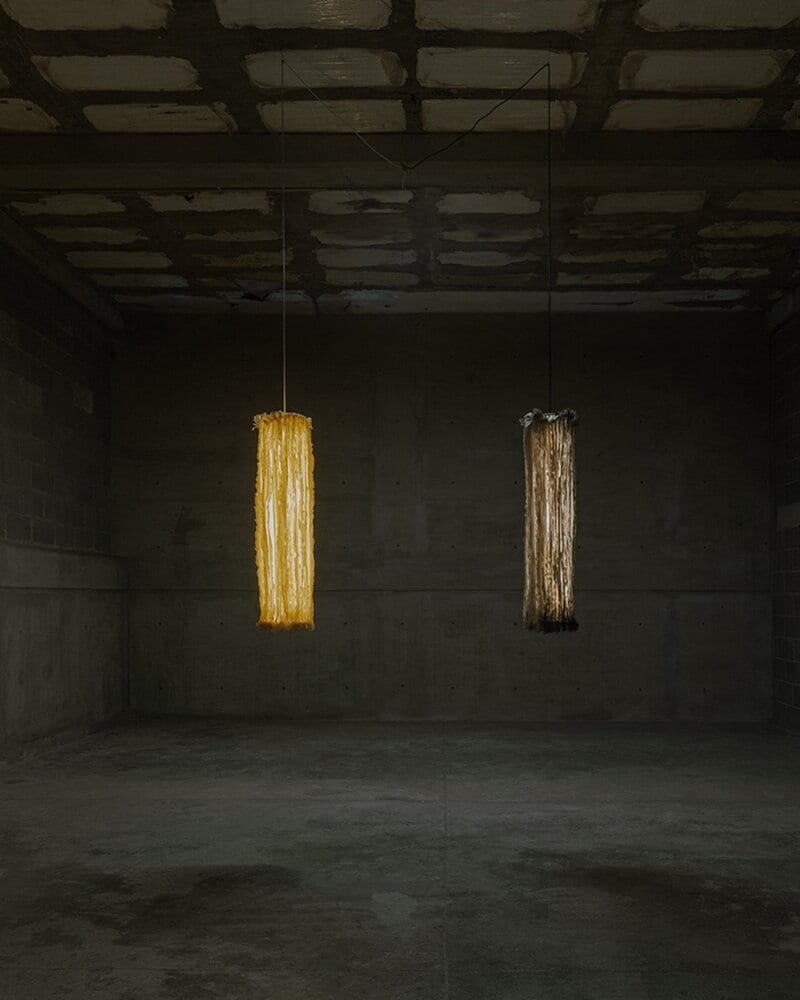
The Lapso bacteria cellulose lamp presents a new pathway for lighting through living materials. Its shell is grown rather than assembled, using bacterial cellulose to form a translucent membrane that glows softly from within. Ruffled textures diffusing light give the object a layered, organic volume that feels part artifact, part living form.
Designers Natural Urbano and Polybion calibrated cell growth to yield strength, translucency, and visual nuance without cutting or manipulation. The resulting bioluminescent effect blends depth with restraint, creating ambient illumination that reads as presence rather than broadcasting light. Because the material is derived biologically, it can return to compost at end of life. In homes or galleries, the Lapso lamp shifts between function and provocation, inviting viewers to consider light, matter, and life as concurrent design material.
Image Credit: Polybion, Natural Urbano
What Makes This Trend Stand Out
- Bioluminescent Lighting
- The integration of bacteria-derived bioluminescent materials in lighting designs creates a paradigm shift, illuminating spaces with a naturally sourced, eco-friendly glow.
- Living Material Design
- Designers are leveraging living materials like bacterial cellulose to forge light fixtures that organically evolve, offering a unique blend of functionality and artistic expression.
- Sustainable Organic Aesthetics
- The use of biodegradable and compostable materials in lighting provides an aesthetic shift towards more sustainable and environment-conscious design solutions.
Sectors Adopting This
- Sustainable Lighting
- The sustainable lighting sector is poised for innovation with the inclusion of renewable and biodegradable materials that promise reduced environmental impact.
- Biodegradable Materials
- Advancements in biodegradable materials are disrupting various industries by offering alternatives that reduce waste and align with circular economy principles.
- Eco-friendly Interior Design
- Incorporating sustainable materials into interior design highlights a growing trend towards creating environmentally responsible living spaces with reduced carbon footprints.