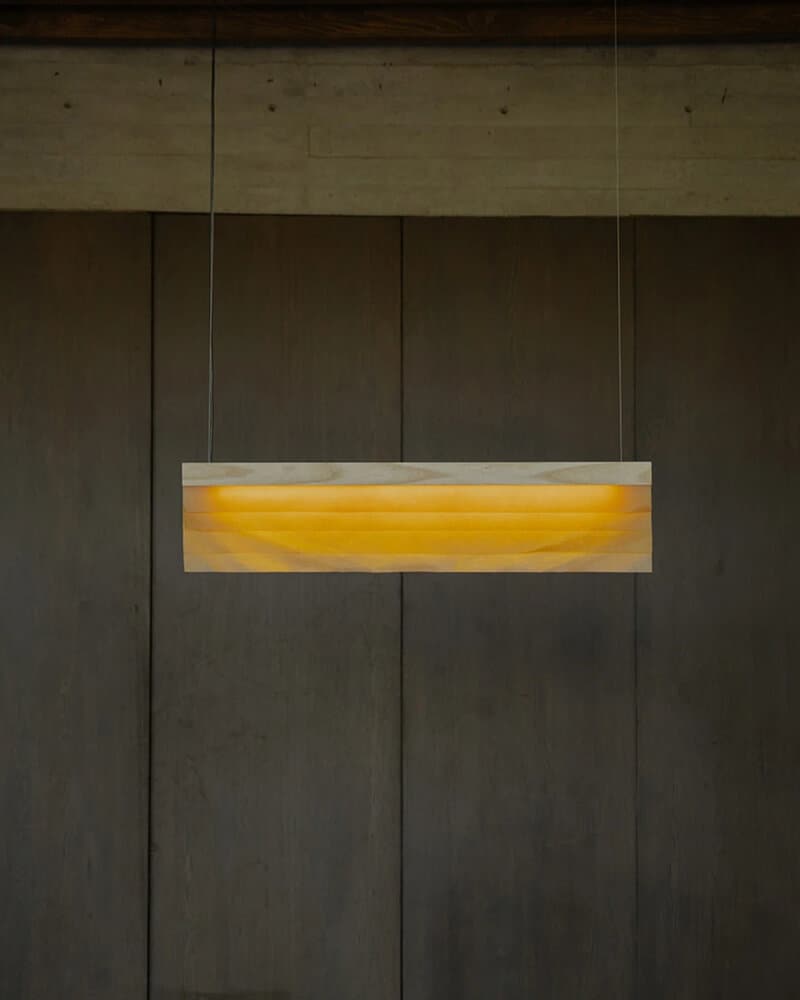
The Cenit collection expands the collaboration between biotechnology company Polybion and Mexico-based design studio Natural Urbano with pendant and table lamps made from Celium™ Manto, a bacterial cellulose material cultivated using agricultural waste. Building on the partners' earlier Lapso pendant, the new collection combines layered cellulose with natural ash wood and stainless steel to create structured lighting pieces. The translucent Celium™ Manto is arranged in gradient-like layers that diffuse light through the biofabricated material while highlighting its organic texture.
Named after the Spanish word for "zenith," the collection pairs renewable cellulose with solid wood and metal to balance natural warmth and structural durability. Polybion cultivates the Celium™ material through a bacterial growth process rather than conventional manufacturing or timber harvesting, positioning it as an alternative material for contemporary product design. Developed by Natural Urbano founders Sebastián Beltrán and Lorena Márquez in collaboration with the Guanajuato-based biotechnology company, the collection demonstrates the application of biofabricated materials across multiple lighting formats.
Image Credit: Polybion, Natural Urbano
Why This Trend Is Growing
- Biofabricated Home Goods
- Bacterial cellulose and other lab-grown materials are expanding beyond prototypes into refined interior products, creating openings for sustainable collections that merge organic aesthetics with scalable material science.
- Waste-derived Materials
- Agricultural byproducts are becoming valuable inputs for premium design materials, signaling new potential for circular supply chains that reduce reliance on timber, plastics, and extractive resources.
- Translucent Organic Lighting
- Layered biomaterials with natural textures are reshaping decorative lighting by offering diffused illumination, tactile surfaces, and distinctive visual effects not easily replicated by conventional shades.
Industries Being Reshaped
- Interior Design
- Biofabricated finishes and furnishings are giving designers new ways to specify sustainable statement pieces while preserving luxury, warmth, and material authenticity.
- Lighting
- The use of renewable cellulose in pendants and table lamps points to differentiated product lines that combine environmental credentials with sculptural form and atmospheric performance.
- Biotechnology
- Material cultivation through bacterial growth is broadening biotech’s commercial relevance into consumer products, where fermentation-based production can support novel textures, lower-impact sourcing, and brand differentiation.