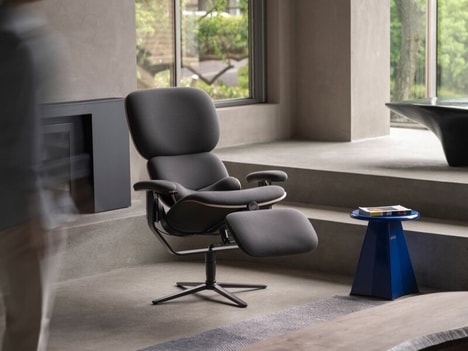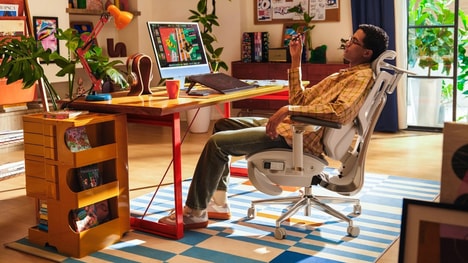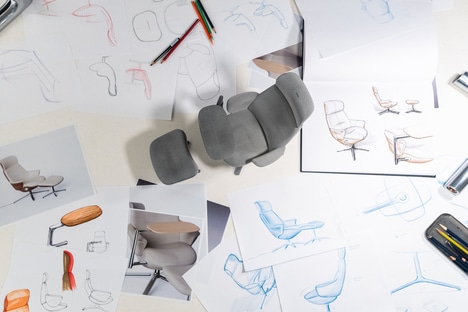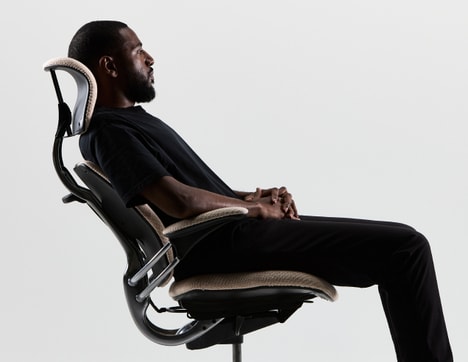
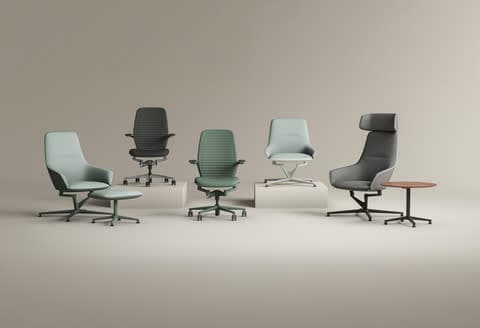
KI debuted the Kiaura Collection, built with Cognetic Technology, at its Inspiration Center during Design Days in Chicago, introducing what the company describes as a new category called Human Performance Seating. Invented by designer Aaron DeJule, Cognetic Technology is a gravity-responsive, multi-axis motion system that continuously adapts to subtle body movements throughout the workday rather than requiring users to manually adjust their seating.
Early controlled studies found that four-hour sessions resulted in reduced anxiety, improved cognitive processing and lower reported back and pelvic discomfort. The collection includes task, conference and lounge chairs, along with complementary tables and ottomans.
KI shows how workplace seating is evolving beyond traditional ergonomics toward designs focused on movement, wellness and overall human performance.
Image Credit: KI
Key Themes Behind This Trend
- Human Performance Seating
- Workplace furniture is shifting from static ergonomic support toward adaptive systems that connect movement, comfort, cognitive function and wellness outcomes.
- Motion-based Ergonomics
- Gravity-responsive seating introduces new possibilities for passive posture support, reducing dependence on manual adjustments while responding continuously to subtle body movement.
- Wellness-centered Workspaces
- Evidence-linked furniture design reflects growing demand for office environments that address anxiety, discomfort and productivity through embedded health-focused features.
Where This Applies
- Office Furniture
- Adaptive seating collections create differentiation for manufacturers by combining ergonomic engineering, wellness research and premium workplace design into integrated product ecosystems.
- Workplace Design
- Interior planning is increasingly shaped by furniture that supports movement and mental performance, expanding the role of seating in employee experience strategies.
- Corporate Wellness
- Health-oriented workplace products provide measurable links between physical comfort, cognitive processing and emotional well-being within broader organizational wellness programs.