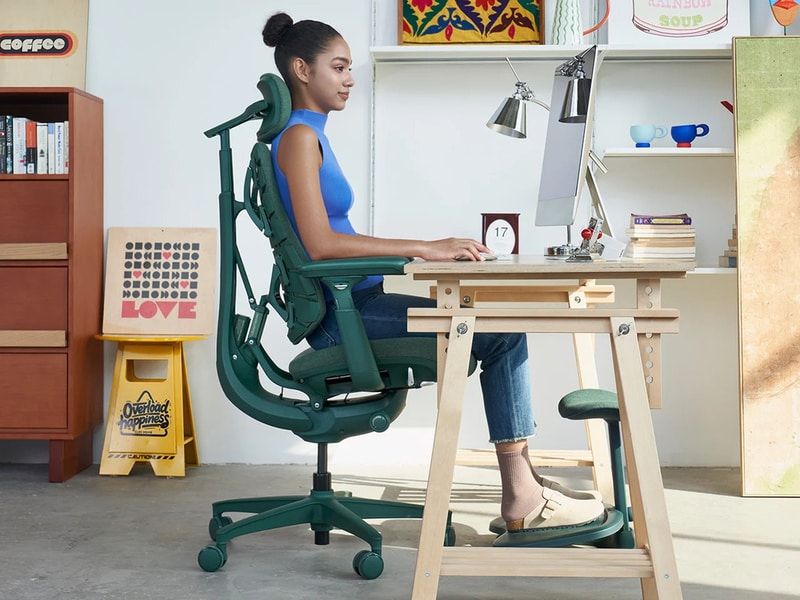
The LiberNovo Omni chair is an ergonomic office chair designed to adjust automatically to a user’s posture throughout the day. The chair features a Bionic FlexFit backrest constructed with 16 pivot points and multiple flexible panels that follow the natural curve of the spine as the body moves. This system maintains continuous contact from the lower back to the shoulders, distributing pressure across the back rather than focusing on a single lumbar point.
The chair incorporates a dynamic support system that responds in real time as the user shifts position, along with a motorized OmniStretch function that applies a controlled spinal stretch during use. It offers four recline positions ranging from upright to a 160-degree position for full extension. The structure integrates synchronized movement across the backrest, seat, and armrests.
Image Credit: LiberNovo
Key Themes Behind This Trend
- Adaptive Ergonomics
- Products that automatically adjust to a user's posture throughout the day enable personalized comfort profiles and reduce one-size-fits-all design limitations.
- Motorized Spinal Support
- Integration of motorized stretching and support mechanisms into seating introduces programmable biomechanical interventions that can actively modulate spinal load.
- Continuous Contact Backrests
- Backrest systems that maintain uninterrupted surface contact across the spine distribute pressure more evenly and challenge traditional focal-lumbar support paradigms.
Where This Applies
- Office Furniture
- Smart seating with sensors and actuators can transform conventional desks into adaptive workstations that prioritize long-term musculoskeletal health.
- Workplace Wellness
- Corporate health programs can incorporate dynamic ergonomic devices to shift preventive care from periodic interventions to continuous, in-situ support.
- Physical Therapy Equipment
- Rehabilitation devices that mirror motorized stretching and synchronized movement concepts could provide at-home therapeutic regimens with real-time posture feedback.