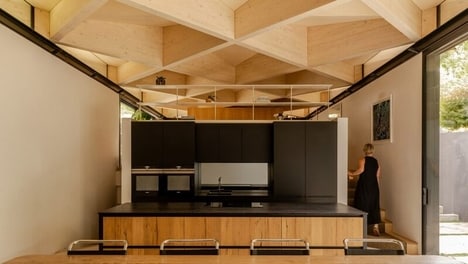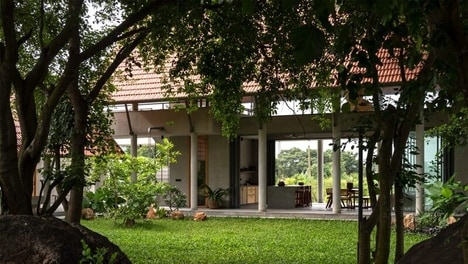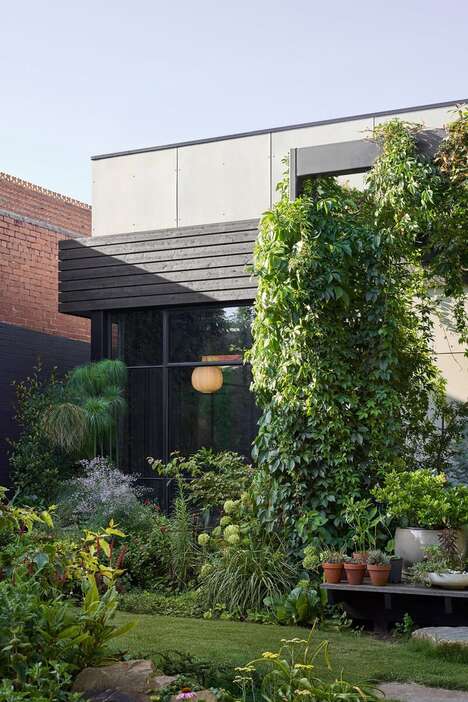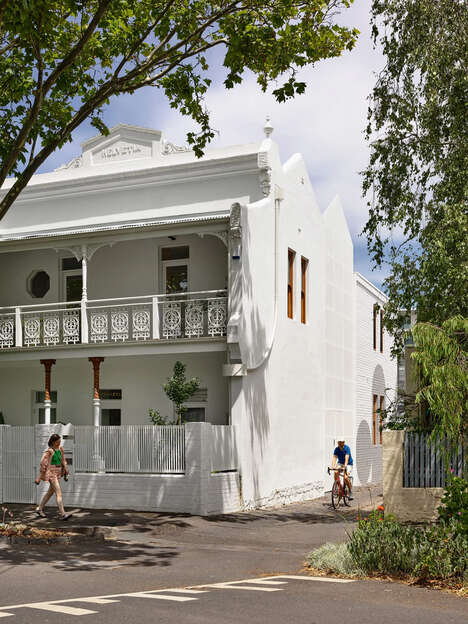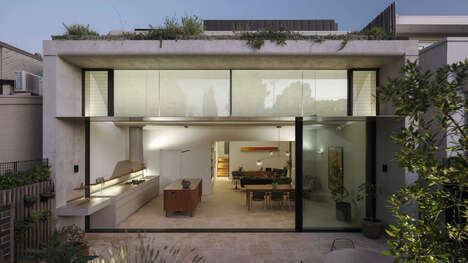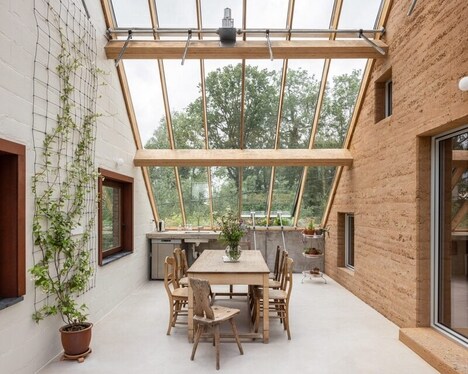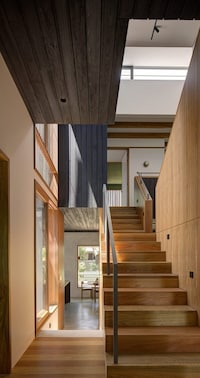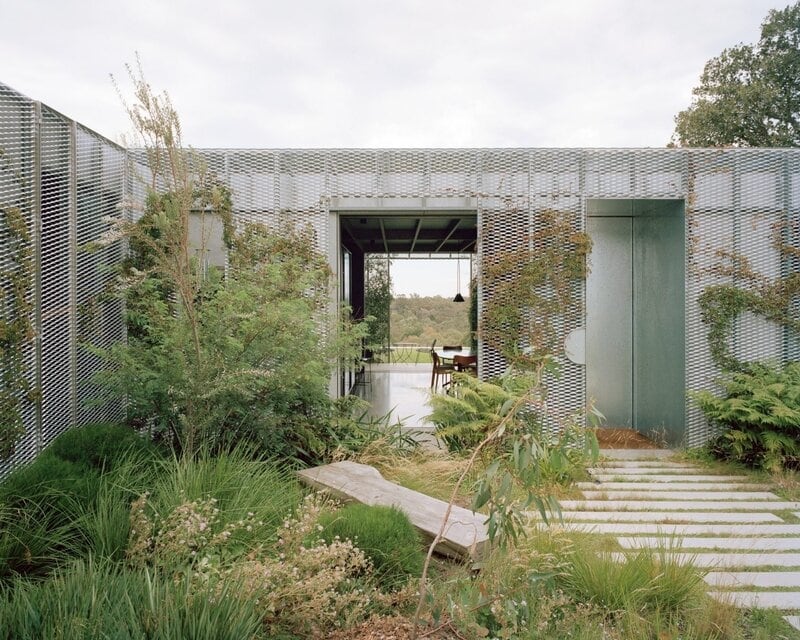
In Melbourne, Hedge and Arbour House situates architecture within a living garden, using hedges and arbour frames to modulate light, privacy, and seasonal change. A sculpted hedge defines the street edge, while a mesh wrapper supports climbing plants that shade interiors in summer and open to winter sun. The plan runs east to west to harness northern light, with courtyards linking the kitchen and lounge to outdoor rooms. Bedrooms and the study branch from a central spine to keep circulation efficient.
Material choices keep the palette grounded: blockwork, blackbutt joinery, and concrete floors sit quietly beside planting. Native species and retained contours let the home settle into its slope rather than dominate it. Passive strategies, cross-ventilation, and layered thresholds make daily movement feel connected to climate and garden. The result is a calm domestic setting where vines, shade, and light choreograph experience, and rooms read as parts of a broader landscape.
Image Credit: Rory Gardiner
What's Driving This Trend
- Integrated Green Architecture
- Blending architecture with living landscapes, such as climbing plants and hedges, shifts design paradigms towards structures that evolve organically with their environment.
- Passive Climate Adaptation
- Employing passive design strategies, like cross-ventilation and light modulation, allows homes to naturally adapt to seasonal changes, promoting energy-efficient living.
- Nature-inspired Living Spaces
- Designing living spaces that draw inspiration from natural elements fosters a harmonious balance between indoor comfort and the surrounding environment.
Who This Affects Most
- Sustainable Architecture
- The intersection of eco-conscious materials and nature-infused design offers new avenues for sustainable building practices.
- Landscape Architecture
- Integrating gardens directly into architectural structures creates innovative opportunities for landscape architects to redefine functional outdoor spaces.
- Home Construction
- The movement towards homes that incorporate adaptive and eco-resilient design highlights a shift in consumer demand in the construction industry.