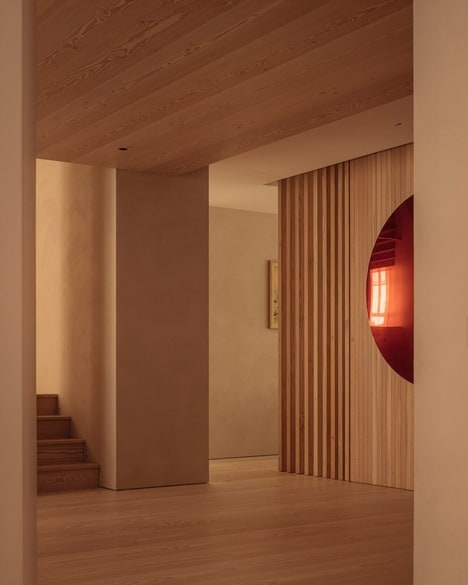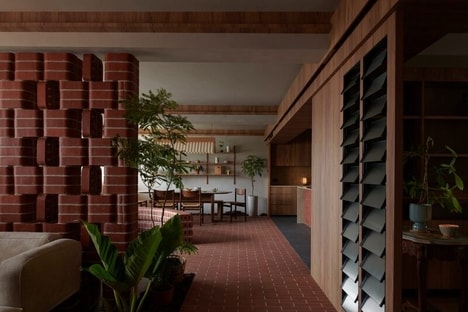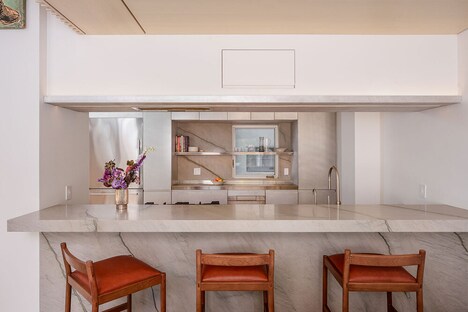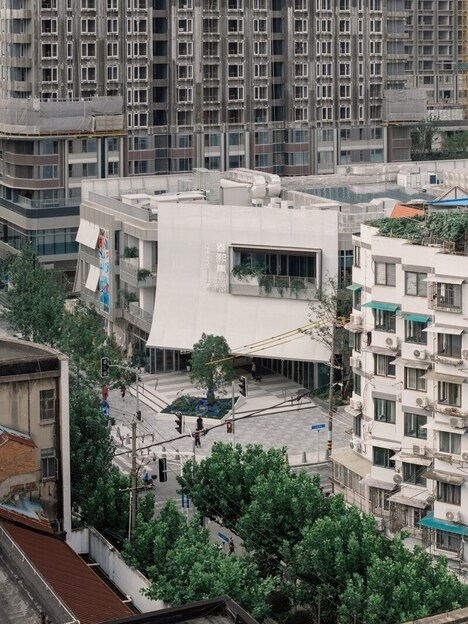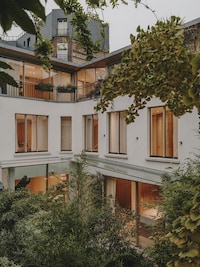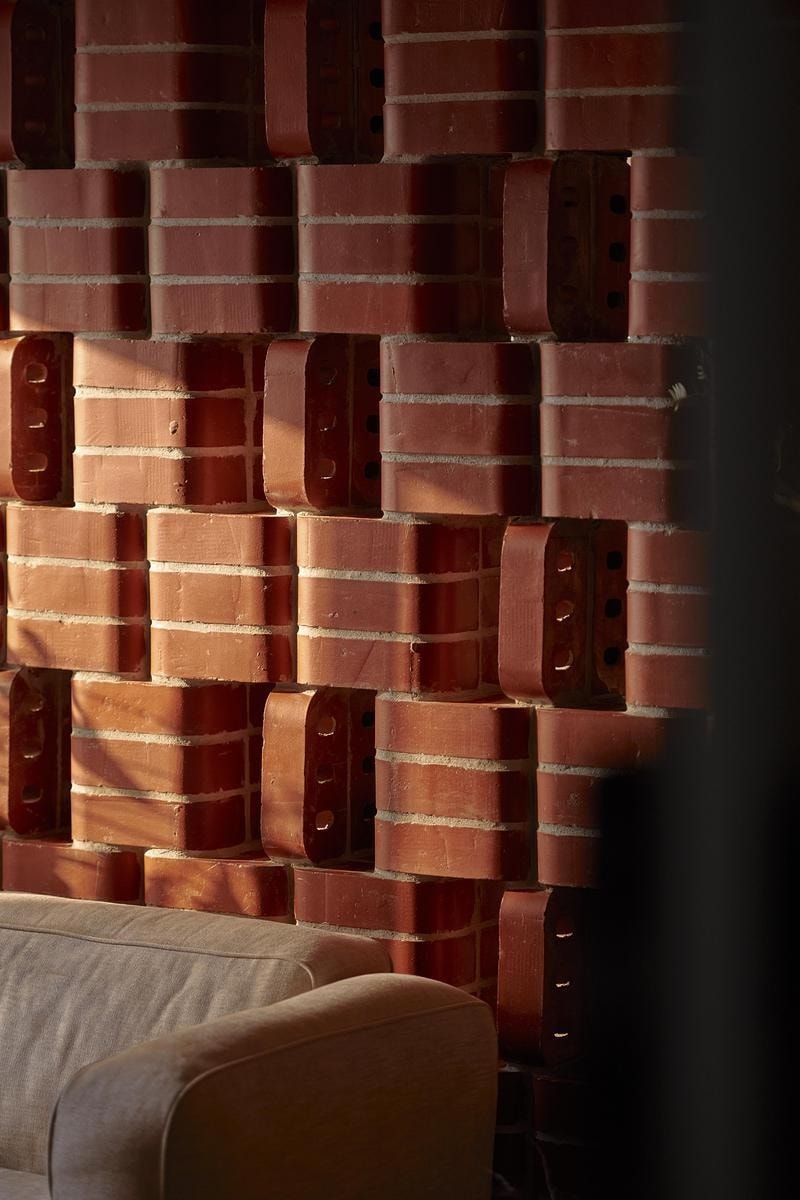
L Architects has completed a residential renovation in Singapore called In a Park. This project saw the transformation of a three-bedroom apartment for a horticulturist whose plant collection had outgrown the original layout.
For the In a Park renovation, L Architects relied on a discontinued double-bullnose brick traditionally found in older Singaporean public parks as the central material to create curved benches, a freestanding wall that separates the study from the living area, and a shared threshold between the study and dining spaces that can be occupied from either side. During sourcing, the design team discovered that the local factory had stopped producing the double-bullnose brick due to low demand, and only 571 pieces remained in inventory, which were purchased in full for this project.
The client had observed that although he loved plants, he did not wake up to them, which became a conceptual driver for making greenery integral to daily living throughout the design.
Image Credit: Jovian Lim
What's Driving This Trend
- Material Resurrection
- Rediscovery and reuse of discontinued local materials creates opportunities to differentiate projects through narrative-rich, limited-run components.
- Biophilic Daily Living
- Designs that weave plants into everyday thresholds and seating reveal potential for products and services that make greenery an integral, habitual part of interior routines.
- Adaptive Salvage Design
- Working around finite inventories encourages bespoke solutions and modular systems that adapt to irregular quantities of reclaimed elements, opening new business models for scarcity-driven customization.
Who This Affects Most
- Residential Architecture
- Architectural practices can leverage story-driven materials and biophilic planning to offer higher-value, experience-focused renovations for urban dwellers.
- Building Materials Manufacturing
- Manufacturers may explore limited-edition runs or made-to-order production of heritage components to meet niche demand for authentic textures and forms.
- Interior Landscaping
- Providers of plant-integration services can develop systems that embed greenery into furniture and thresholds to support continuous, low-effort daily interaction with nature.