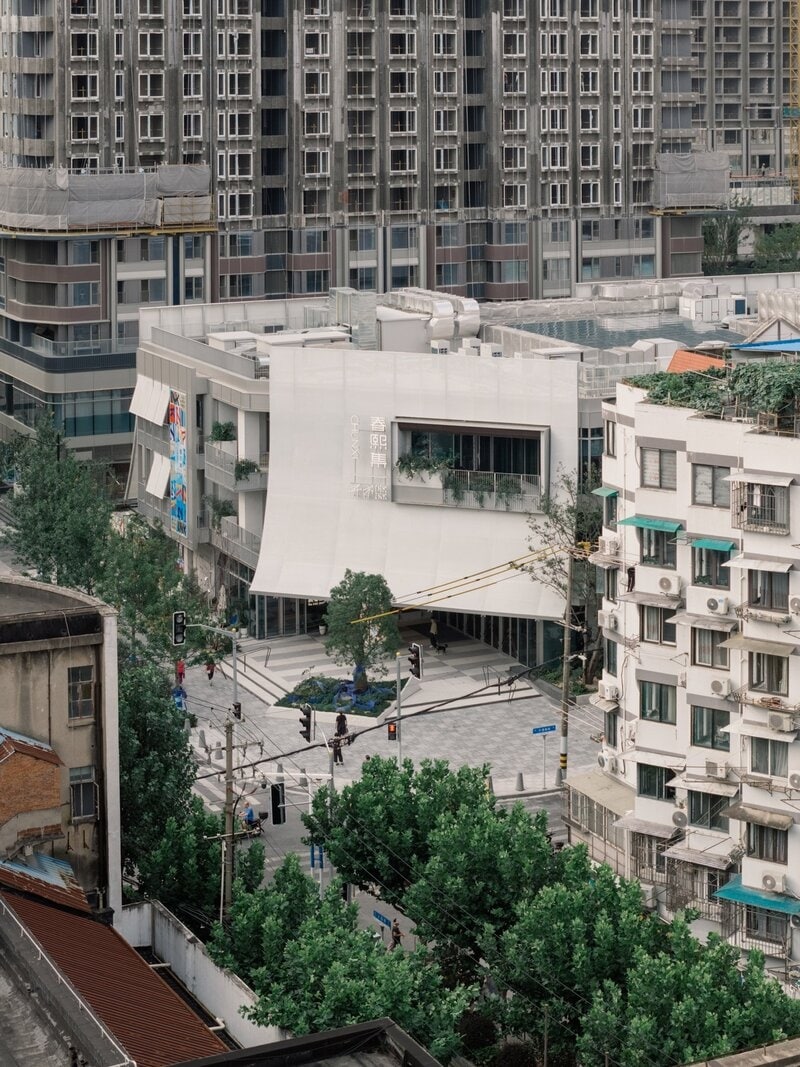
The LINEHOUSE Ink Ink food market in Shanghai’s Hong Shou Fang is organised around a two-storey brick hall shaped like a greenhouse. The main volume has a pitched glass roof supported by a curved metal truss, creating a bright central atrium with open visibility across both floors. The ground level contains modular food stalls arranged around the perimeter, each built with straight counters and simple shelving to keep circulation clear. The entrance uses recycled red bricks that contrast with the existing grey brick structure, forming a defined threshold into the market.
The upper floor wraps the atrium with fixed restaurant units and balcony seating that overlook the main hall. Planters line the railings with foliage that softens the brick and metal structure, and full-height glass doors open to connect the interior with adjacent pedestrian lanes. The layout prioritises vendor flexibility, clear sightlines and efficient movement through the market.
Image Credit: Wen Studio
What's Driving This Trend
- Sustainable Architecture
- There is a growing shift towards incorporating eco-friendly materials, like recycled bricks, in market and commercial space designs.
- Open-concept Spaces
- Designing interiors with open visibility, such as the central atrium, enhances the customer experience by promoting a sense of community and interaction.
- Modular Market Design
- The use of modular food stalls allows for adaptive layouts, providing flexibility as vendor needs evolve over time.
Who This Affects Most
- Commercial Real Estate
- The demand for flexible and innovative design in commercial spaces opens new opportunities for real estate developers to attract diverse tenants.
- Interior Design
- Innovative uses of materials and layout, focusing on sustainability and openness, are reshaping modern interior design principles.
- Food and Beverage
- Unique spatial arrangements in food markets can attract more foot traffic and enhance the dining experience, creating competitive advantages in the culinary industry.