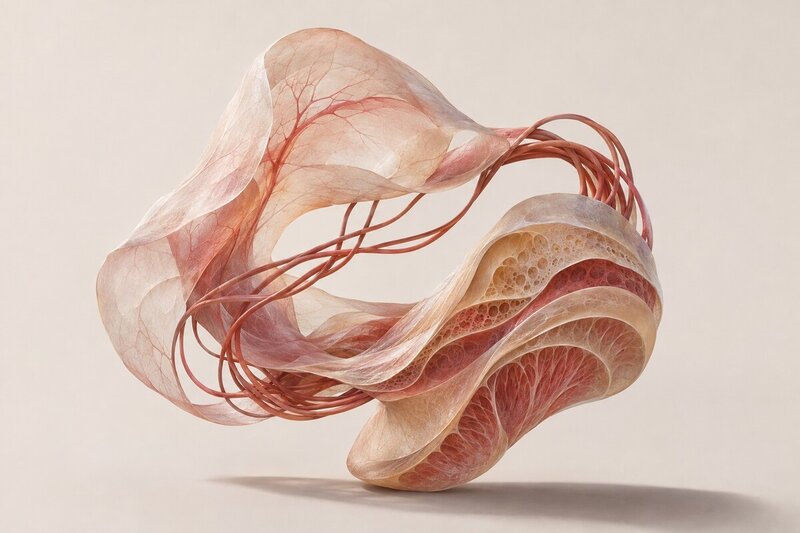
Hiroshi Imaeda of PENETRATE Tokyo created Experimental Bio-Typography: Connection / Loneliness, a self-initiated set of four works - Meet, Ooze, Protocol and Seep - built for digital displays and printed posters alike. Treating letters like living structures, the series turns online interaction into forms with cellular matter, translucent organisms, scans and cable-like vascular imagery.
In Protocol, cross-section brain imagery frames identity as data, while Seep replaces blood vessels with tangled cables. Those choices pull typography toward anatomy, keeping the letters readable while making digital communication feel physically present.
Built to work on screens and in print, the project widens where experimental type can operate for graphic designers. Imaeda's use of AI image generation for organic texture, followed by manual composition in Adobe Illustrator and Adobe Photoshop, keeps creative control with the designer while folding AI into a practical poster workflow.
Image Credit: AI-generated, designboom
Key Themes Behind This Trend
- Bio-typographic Design
- Letterforms inspired by anatomy and cellular structures create new visual languages for brands seeking more visceral digital and print identities.
- AI-assisted Poster Workflows
- Hybrid creative processes combining generative imagery with manual composition expand production possibilities while preserving designer-led authorship.
- Physicalized Digital Communication
- Social media interactions represented as organisms, vessels and cables reveal opportunities for making abstract online behavior feel tangible and emotionally resonant.
Where This Applies
- Graphic Design
- Experimental typography that remains legible across screens and print broadens the commercial role of type as both information and immersive visual experience.
- Digital Advertising
- Anatomical and bio-digital aesthetics offer campaign makers distinctive formats for translating online identity, connection and loneliness into memorable branded visuals.
- Creative Software
- Tools that integrate AI texture generation with precise editing environments can support more fluid workflows for artists producing complex hybrid media.
Featured Reports
The Future of Food Isn't Always About Invention
American Dream Fatigue