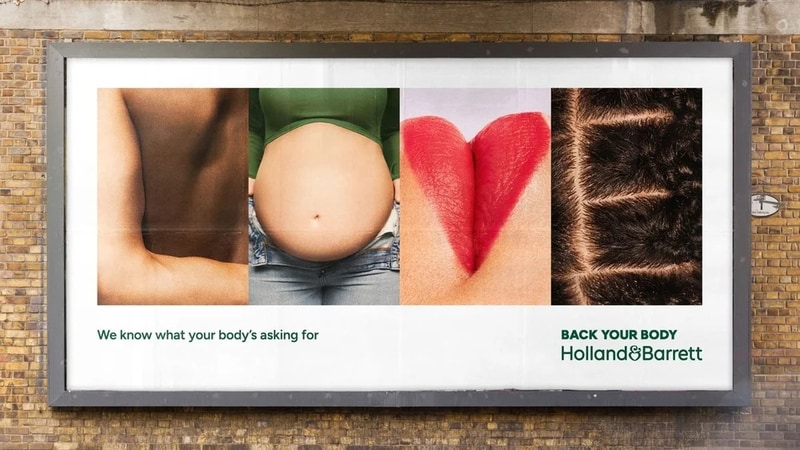
The Back Your Body campaign by Holland & Barrett uses human anatomy to construct typography across a series of out-of-home visuals. Created by Lucky Generals and photographed by The Masons, the campaign forms words using real body parts including arms, lips, torsos, and hair arranged into letter shapes. The visuals replace standard typefaces with physical compositions, applying the approach across billboards and brand imagery.
The campaign is part of the wider Back Your Body platform, which appears across outdoor, retail, and digital channels. Words such as “love” are assembled using different anatomical elements, with each letter formed from photographed body parts. The typography system is designed to extend across multiple formats, creating a consistent visual identity built from human forms. The campaign is distributed as part of a broader rollout that includes outdoor advertising and brand applications across physical and digital environments.
Image Credit: Holland & Barrett
Key Themes Behind This Trend
- Anatomical Typography
- This approach replaces traditional typefaces with curated human forms, opening possibilities for tactile, identity-driven lettering systems that blur graphic design and photography.
- Human-form Branding
- Brands are increasingly using the human body as a core visual asset, suggesting new opportunities for inclusive storytelling and personalized brand identities built from diverse anatomical elements.
- Cross-format Physical Type
- A typography system designed to work across billboards, in-store displays, and digital screens points to scalable physical-to-digital design frameworks that maintain visual consistency while leveraging real-world textures.
Where This Applies
- Outdoor Advertising
- Large-format displays that feature body-based compositions could shift creative production toward photographic type design and bespoke campaigns that prioritize human-centric visuals over standard fonts.
- Retail Visual Merchandising
- In-store branding that integrates anatomical typography can create immersive environments where product storytelling and physical human form combine to influence shopper perception and engagement.
- Digital Content Creation
- Digital channels that adopt human-constructed lettering enable new content formats and templates for social, e-commerce, and AR experiences that emphasize authenticity and tactile aesthetics.