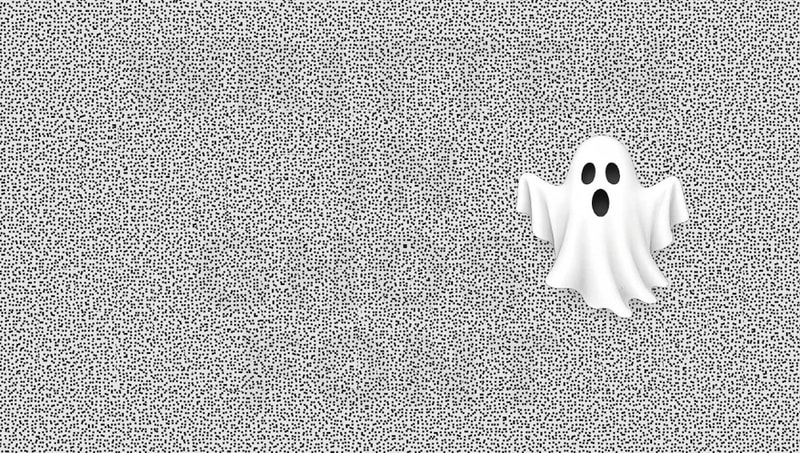
The Ghost Font is an experimental typeface created by designer Eric Lu that uses motion rather than conventional letterforms to display readable text. Each character is formed from thousands of moving dots, with the text drifting upward while surrounding dots move in the opposite direction to produce an optical illusion. The design relies on the Gestalt principle of common fate, allowing people to recognise words through movement while many AI vision systems struggle to interpret the same animation accurately.
The project was developed in response to concerns about AI companies and automated bots scraping publicly available content without creators' consent. Demonstrations showed that several multimodal AI models misread the hidden text or prioritised decoy content when analysing the animation frame by frame. The experiment joins other anti-scraping approaches such as invisible watermarks and image obfuscation while encouraging discussion about differences between human perception and machine vision.
Image Credit: Ghost Font
What Makes This Trend Stand Out
- Motion-based Typography
- Animated letterforms that depend on perception rather than static shapes create new possibilities for expressive interfaces, privacy-conscious publishing, and content formats that remain readable to humans while challenging automated systems.
- Anti-scraping Design
- Visual obfuscation techniques are expanding into creative design systems that protect digital work from unauthorized AI harvesting without removing content from public view.
- Human-machine Perception Gaps
- Differences between human cognition and machine vision are becoming a design resource for security, branding, and interactive media that exploit what people can interpret more reliably than algorithms.
Sectors Adopting This
- Digital Publishing
- Publishers and independent creators could use perceptual text treatments to make online articles, portfolios, and visual assets less vulnerable to automated scraping while preserving audience accessibility.
- Graphic Design
- Studios may develop new type systems and motion identities that combine experimental aesthetics with functional resistance against unauthorized machine reading.
- Cybersecurity
- Security providers can explore perception-based interfaces and verification layers that distinguish human users from automated bots through dynamic visual interpretation.