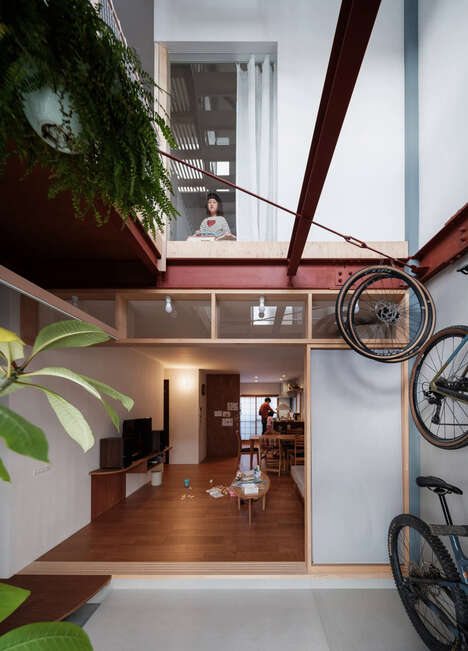
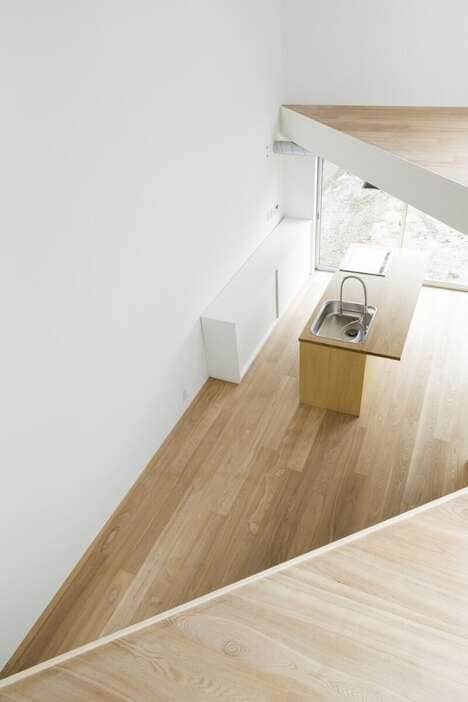
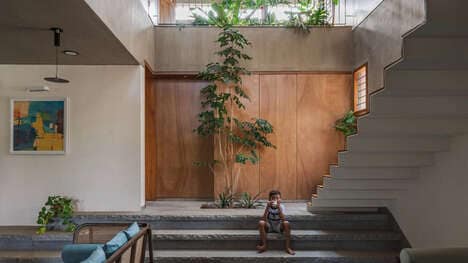
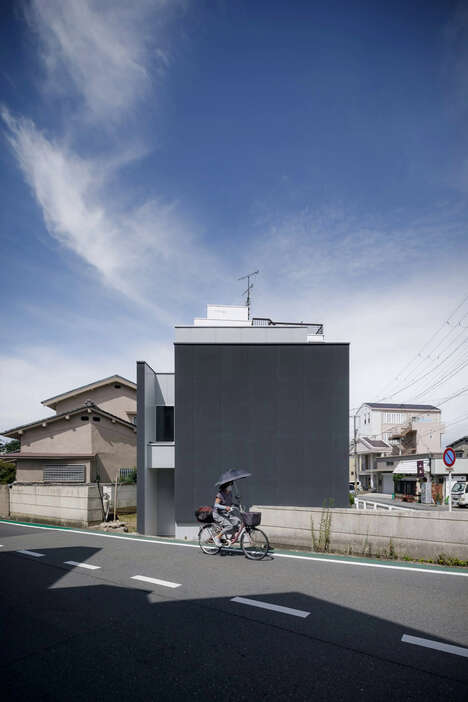
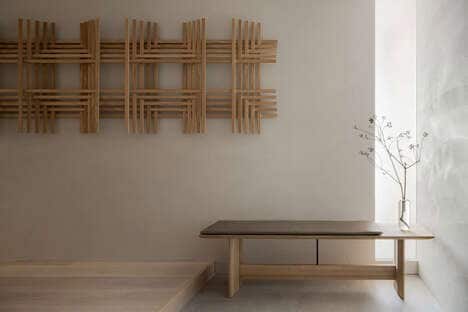
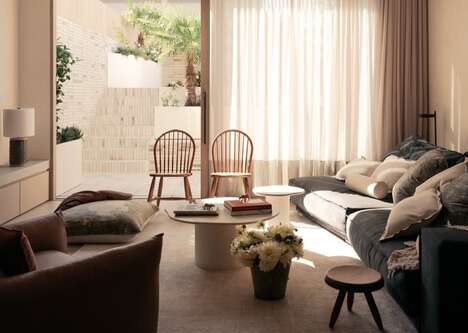
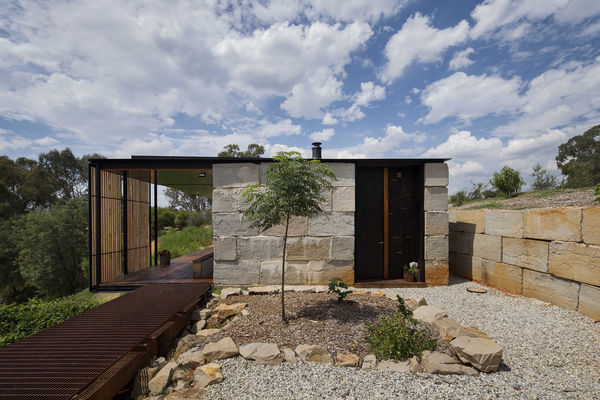
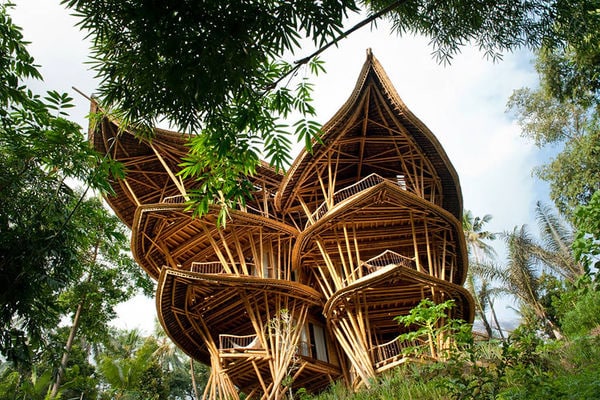
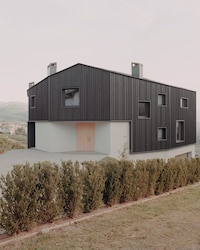
Tokyo studio Hannat Architects have designed the 'E House,' a single-family home located in the Miyagi countryside of Japan. The home is surrounded by mountainous landscape on three sides, with the southern facade opening out towards a wide expanse of rice fields.
The architects designed the home to optimize for light and darkness. For instance, some parts of the home naturally fill with sunlight, while other parts are shrouded in shadow. Explaining the decision, studio co-founder Risa Tsutsumi says, "Uniformly bright space is not always appealing. Light and shadow always coexist in traditional Japanese culture, where darkness accentuates lightness and refined culture appreciates the existence of darkness."
An angular corridor is located in the center of the home, around which the rooms are arranged. The interior is comprised of three separate spaces which accommodate an open-space living room, master bedroom and children's rooms.
What's Driving This Trend
- Optimized Light and Darkness
- Designing spaces that embrace both light and shadow can create visually appealing and culturally significant environments.
- Angular Corridor Design
- Using an angular corridor as the central element in home design allows for unique room arrangements and spatial experiences.
- Multi-functional Interior Spaces
- Creating separate spaces within a home that serve multiple functions provides flexibility and adaptability to changing needs.
Who This Affects Most
- Architecture
- Architects can explore innovative approaches to incorporating light and shadow into their designs, creating unique and visually captivating structures.
- Interior Design
- Interior designers can experiment with angular corridor designs to create dynamic and engaging spatial layouts within homes and buildings.
- Residential Construction
- Builders and developers can incorporate multi-functional interior spaces into their residential projects to offer homeowners adaptable living areas.