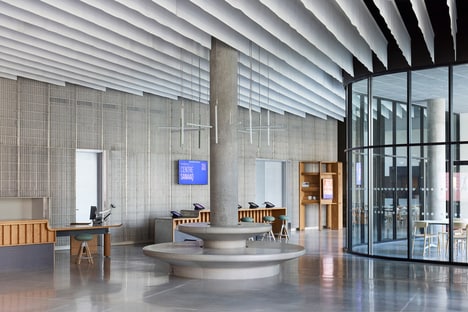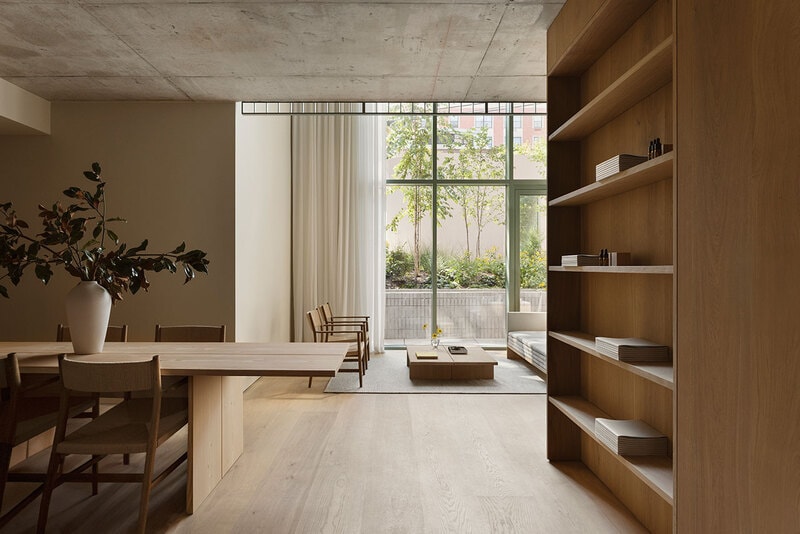
The Dinesen Apartment presents a two-floor showroom arranged as a lived-in environment rather than a traditional retail display. It is located at 144 Vanderbilt, designed by SO-IL, and developed by Tankhouse. Architect David Thulstrup uses oak planks across floors, walls, and stairs to immerse visitors in a continuous wood setting that highlights the company’s material range. The approach allows guests to experience texture, grain, and scale in a natural context instead of viewing isolated samples. The interior blends engineered oak panels with expressive HeartOak boards that preserve natural cracks and butterfly joints, creating variation while keeping the palette unified.
Furniture from Danish designers and selected vintage pieces complement the warm tone of the wood without distracting from it. Textiles and minimal accessories complete the domestic atmosphere, positioning the space as both a showroom and a setting for small gatherings or design events. The project marks a significant presence for the brand in the United States and demonstrates how a material-driven identity can be communicated through spatial design rather than conventional product presentation.
Image Credit: Dinesen
What's Driving This Trend
- Immersive Showroom Experiences
- Showrooms that emulate lived-in spaces offer a contextual understanding of products, transforming traditional retail into experiential journeys.
- Material-centric Design
- Emphasizing materials as focal points in design fosters a deeper connection to craftsmanship and authenticity, appealing to discerning consumers.
- Hybrid Spaces for Engagement
- Combining showroom functionalities with event capabilities leverages physical space for multi-purpose engagement, enhancing brand presence and interaction.
Who This Affects Most
- Interior Design
- Integrating narrative-driven environments into interior design practices enhances storytelling and customer engagement through spatial experience.
- Retail Innovation
- The fusion of residential elements with retail allows for novel consumer interactions, challenging conventional sales environments.
- Sustainable Architecture
- Utilizing natural materials like wood in architectural spaces emphasizes sustainability and aesthetic warmth, aligning with eco-friendly consumer preferences.