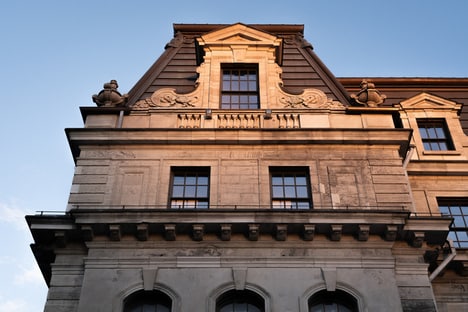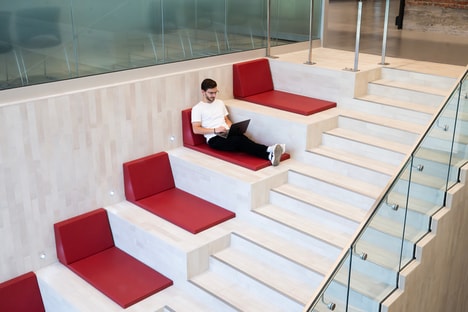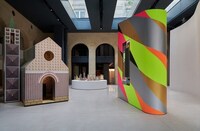
The Centre SANAAQ is a recently inaugurated public institution in Montreal. The building and its interior were conceptualized through the collaborative efforts of Pelletier de Fontenay, Architecture49, and Atelier Zébulon Perron.
Situated within the base of a new residential building, Centre SANAAQ is intended to function as a vibrant cultural nexus for the Peter-McGill district. Its organizational principle is that of an 'archipelago,' featuring a series of distinct yet interconnected zones that include a central gathering area, a performance space, a library, and a café. The architectural and interior design strategy prioritizes fluid movement, visual transparency, and a diverse material palette combining elements like metal grating, wood, and concrete.
The overarching concept frames the center not as a static building but as an adaptable framework for community-driven cultural production and social interaction.
Image Credit: James Brittain
Key Themes Behind This Trend
- Hybrid Cultural Spaces
- Cultural institutions are evolving into hybrid spaces that meld community, artistic, and social interaction to encourage dynamic cultural production.
- Modular Architectural Design
- New architectural designs prioritize modularity and adaptability, allowing spaces like Centre SANAAQ to shift and change purpose based on community needs.
- Sustainable Material Fusion
- The integration of diverse materials such as metal, wood, and concrete reflects a trend toward sustainable fusion in interior design, balancing aesthetics with functionality.
Where This Applies
- Architecture and Urban Planning
- Innovations in urban design and architecture are increasingly embracing adaptive and collaborative frameworks that support multifunctional community spaces.
- Cultural and Creative Industries
- The dynamic nature of modern cultural institutions is reshaping the cultural and creative industries, fostering environments that support continuous cultural engagement.
- Interior Design
- Interior design is seeing a shift towards diverse material use and transparency, creating flexible environments that promote social interaction and creative expression.